
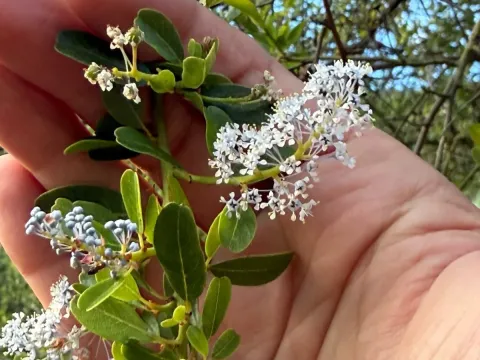
Ceanothus spinosus
Ceanothus spinosus
Ceanothus spinosus belongs to the Rhamnaceae family. This evergreen shrub is native to coastal regions of California and Mexico, where it thrives as a key component of the chaparral plant community.
What the section contains
Ceanothus spinosus
The culture has strict light requirements. To achieve full development and dense crown formation, the plant needs direct sunlight for most of the day, which also ensures abundant flowering.
Soil quality is the most critical factor for successful cultivation. Ceanothus is highly sensitive to waterlogging, requiring well-drained, sandy, or rocky loamy soils with a neutral to slightly acidic pH level.
Climatic preferences are limited to regions with mild winters. The shrub does not tolerate harsh frosts well and requires protection from cold northern winds that can cause foliage desiccation.
Agricultural practices involve moderate watering only during the establishment phase. Mature specimens exhibit high drought tolerance and do not require regular irrigation, as excess water can prove fatal to the root system.
The primary threat to the plant is fungal infection caused by water accumulation in the root zone, which frequently leads to root rot and eventual death of the shrub.
Aphids are common pests that target young shoots and inflorescences, reducing the plant's ornamental value and significantly slowing its annual growth rate.
Scale insects can also pose a serious threat by extracting sap from the leaves and weakening the plant's immune system, potentially allowing secondary viral infections to take hold.
Powdery mildew often emerges when there is poor air circulation within the crown, especially during spring periods characterized by higher humidity levels.
To prevent the spread of pests and diseases, it is highly recommended to perform timely sanitary pruning and maintain a clean area around the base to avoid debris accumulation.