
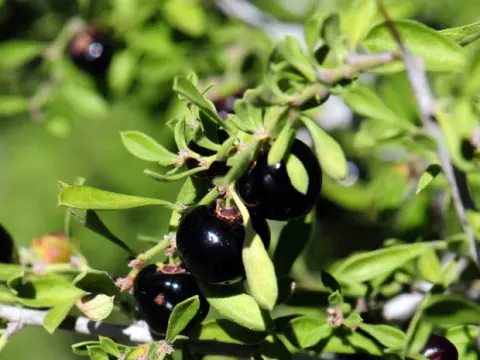
Condalia
Condalia
Condalia is a genus of shrubs and small trees belonging to the Rhamnaceae family. Native to the arid and semi-arid regions of North and South America, these plants are highly adapted to environments where water availability is limited and soil conditions are challenging for many common agricultural crops.
What the section contains


Condalia
The plant thrives in well-drained, sandy, or rocky soils and requires full sun exposure to reach its peak growth potential. Its xerophytic nature, characterized by leather-like leaves and strong, often thorny branches, allows it to survive extreme drought conditions without needing significant irrigation or fertilization.
Botanically, Condalia is known for its resilience and protective structure, which makes it an excellent choice for natural barriers or security hedges. The root system is deep and expansive, helping the plant extract moisture from deeper soil horizons and contributing to soil stabilization in erosion-prone areas.
Cultivation requires minimal intervention, primarily focusing on periodic pruning to maintain shape and encourage airflow within the canopy. Given their origin, these plants are highly sensitive to frost and waterlogging; therefore, they are best suited for warm climates with distinct dry seasons.
In terms of хозяйственное (economic) utility, various species produce edible fruits often harvested by locals, while the dense wood is highly valued for crafting small, durable items. Beyond their immediate use, they contribute to biodiversity in arid regions by providing habitat and food sources for local fauna.
The primary threats to Condalia include fungal root diseases triggered by poor drainage or excessive soil moisture. To mitigate these risks, it is essential to ensure that the planting site has excellent water permeability and to avoid over-irrigation during the cooler, wetter months.
Pest pressures are generally low, but infestations of aphids and scale insects can occur, particularly during periods of environmental stress. Implementing integrated pest management strategies, such as physical removal or eco-friendly insecticidal soaps, is usually sufficient to maintain plant health.