
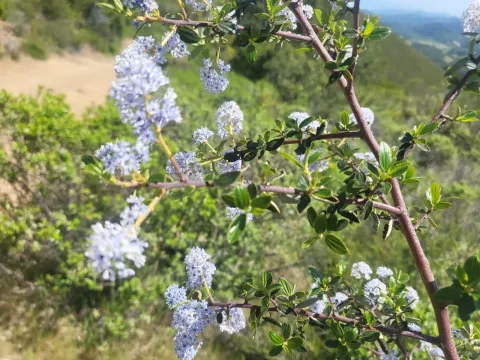
Ceanothus sorediatus
Ceanothus sorediatus
Ceanothus sorediatus, commonly known as the king mountain lilac, is an evergreen shrub belonging to the Rhamnaceae family. This species is native to the coastal ranges of California, where it thrives in chaparral and woodland habitats, displaying a robust and drought-tolerant character.
What the section contains
Ceanothus sorediatus
Botanically, it is characterized by its small, serrated leaves and stunning clusters of blue to violet flowers that bloom in late spring. These blooms are highly attractive to local pollinators, making the shrub a valuable addition to ecological garden projects.
The cultural requirements for this species are specific: it demands excellent drainage and thrives in rocky, gravelly, or sandy soils. It is critical to avoid waterlogging the root zone, as the plant is highly susceptible to root rot pathogens when grown in heavy, clay-based substrates.
This shrub requires full sun exposure to maintain its dense, compact growth habit and to promote prolific flowering. While it is naturally drought-tolerant once established, providing occasional supplemental irrigation during extreme heatwaves can help the plant retain its vibrancy.
Minimal pruning is recommended, ideally performed immediately after the flowering period ends. This promotes healthy wood development and prevents the shrub from becoming too woody or sparse, which is a common issue with older specimens left unattended.
The primary threats to Ceanothus sorediatus are fungal infections of the roots, particularly species of Phytophthora, which are exacerbated by poorly drained soils and excessive moisture.
Insect pests, such as aphids and scale insects, frequently target the succulent new growth and stems, potentially weakening the plant if infestations are not controlled.
In humid microclimates, the plant may suffer from powdery mildew, which manifests as a white, dusty coating on the leaves and can reduce the photosynthetic efficiency of the shrub.
Maintaining proper spacing between plants is essential to improve airflow, which acts as a primary cultural defense against most common foliage diseases.
If chemical intervention is necessary, targeted applications of horticultural oils or approved fungicides should be applied carefully to avoid harming beneficial pollinator insects attracted to the blossoms.