
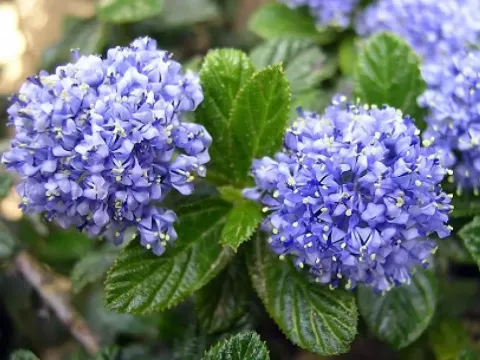
Ceanothus veitchianus
Ceanothus veitchianus
Ceanothus veitchianus is an evergreen ornamental shrub belonging to the Rhamnaceae family. Originating from the coastal regions of California, this plant is well-adapted to Mediterranean-like climates characterized by mild, wet winters and warm, dry summers.
What the section contains
Ceanothus veitchianus
The plant thrives in full sun and requires a sheltered position to protect it from harsh, cold winds. It is ideally suited for growing against south or west-facing walls, which provide the extra warmth needed to support its growth and evergreen foliage.
Regarding soil conditions, Ceanothus veitchianus demands excellent drainage. It is highly sensitive to waterlogged ground, which can lead to rapid root rot. Planting in well-draining, moderately fertile soil with a neutral to slightly acidic pH is essential for health.
In cooler climates, winter protection is necessary. Mulching the root base and using horticultural fleece to cover the foliage during deep freezes can significantly improve the survival rate of the shrub in non-native environments.
Maintenance includes minimal irrigation once the plant is established, as Ceanothus is known for its drought tolerance. Light pruning should be performed immediately after flowering to maintain a compact shape and encourage denser growth for the following season.
The primary threats to Ceanothus veitchianus are fungal pathogens such as honey fungus and root rot, which typically occur in poorly drained, heavy clay soils.
Pest issues often involve infestations of aphids and scale insects, which can weaken the plant by feeding on the sap of tender new leaves and young stems.
Chlorosis is another common concern, often resulting from improper soil pH or iron deficiency, which causes the leaves to yellow while the veins remain green.
Preventative care includes monitoring the undersides of leaves for early signs of pests and ensuring that the planting site has optimal air circulation to reduce fungal risks.
Applying appropriate treatments early in the season can successfully mitigate pest populations, allowing the shrub to maintain its ornamental value throughout the year.