
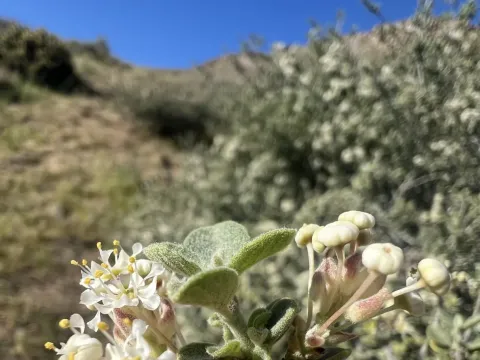
Ceanothus pauciflorus
Ceanothus pauciflorus
Ceanothus pauciflorus is a shrub belonging to the Rhamnaceae family, characterized by its drought tolerance and distinct botanical features. It is naturally adapted to rugged terrain and is increasingly used in xeriscaping.
What the section contains
Ceanothus pauciflorus
The plant requires well-drained, sandy, or rocky soil to thrive. It is essential to ensure that the site does not have waterlogging issues, as the roots are highly susceptible to rot when exposed to excessive moisture for prolonged periods.
Full sun exposure is a critical requirement for this species. When planted in shaded areas, the plant tends to lose its dense habit and becomes prone to leggy growth, which significantly reduces its ornamental value.
Regarding climate, this shrub prefers mild, Mediterranean-like environments. It can handle periods of low precipitation well, but young plants need to be monitored during their first year to establish a deep, resilient root system.
Minimal fertilization is required as this species is adapted to nutrient-poor soils. Over-fertilization can actually be detrimental, promoting excessive foliage growth at the expense of floral development and structural integrity.
Root rot, specifically caused by Phytophthora species, remains the primary threat to Ceanothus pauciflorus. This condition is almost always linked to poor drainage or excessive irrigation during the dormant season.
Pests such as aphids and scale insects are common in garden settings. They typically aggregate on the soft, growing tips of the branches, causing localized damage and sometimes transmitting viral pathogens.
Powdery mildew is a frequent foliar disease that occurs in humid, stagnant air conditions. Proper spacing between individual plants is the most effective cultural method to maintain airflow and minimize the risk of infection.
Spider mites can become problematic during hot and dry summers. They thrive in dusty environments and can cause significant leaf damage, characterized by stippling and eventual leaf drop if left untreated.
Chlorosis is frequently observed when the soil pH is not suitable for the plant's uptake of micronutrients. Maintaining an appropriate soil balance is vital for the long-term health and vitality of this shrub.