
Ceanothus perplexans
Ceanothus perplexans
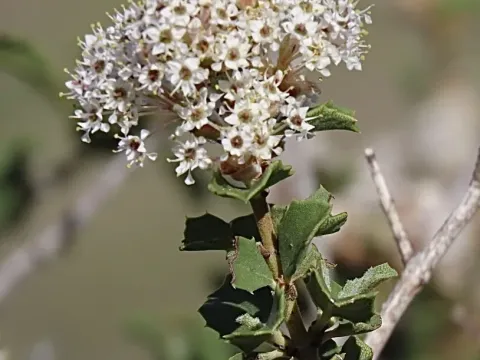
Ceanothus perplexans is a distinct species of evergreen shrub belonging to the Rhamnaceae family. It is native to the chaparral regions of Southern California and parts of Mexico, where it grows in rocky, well-drained soils.
What the section contains
Ceanothus perplexans
The plant requires full sun exposure to maintain its characteristic dense growth habit. Adequate air circulation is crucial to prevent moisture-related issues, making it ideal for open landscape sites.
Soil requirements are relatively specific: the plant demands excellent drainage. It thrives in gritty, sandy, or rocky soil types and will not tolerate heavy clay that holds moisture for extended periods.
Regarding climate, this shrub is well-adapted to Mediterranean-type environments. It possesses high drought tolerance once established, making it a sustainable choice for water-wise landscaping projects.
Agronomic management involves minimal pruning to remove dead wood and occasional shaping after the flowering season. Fertilization is rarely needed as the plant is adapted to nutrient-poor soils.
The most significant threat to Ceanothus perplexans is root rot caused by Phytophthora species, which often occurs due to overwatering or poorly drained soil conditions.
Armillaria root disease is another serious soil-borne pathogen that can affect mature shrubs in native garden settings, especially if the site was previously forested.
Insects such as aphids and scale insects are common pests. They typically congregate on new growth, potentially causing yellowing and stunted development of leaves.
Powdery mildew can occur during periods of high humidity and limited air movement, resulting in a white fungal coating on the foliage and reduced photosynthetic efficiency.
Maintaining a clean garden bed and avoiding irrigation near the base of the plant are the most effective preventative strategies against these biotic threats.