
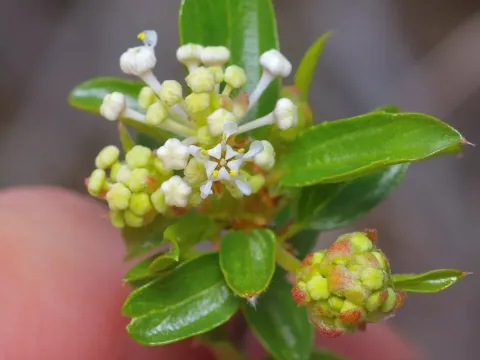
Ceanothus ovatus
Ceanothus ovatus
Ceanothus ovatus, commonly known as the inland Jersey tea, is a deciduous shrub belonging to the Rhamnaceae family. It is native to the central and eastern parts of North America, where it thrives in dry, rocky, or sandy prairie habitats.
What the section contains
Ceanothus ovatus
The plant requires full sun exposure and excellent soil drainage. It is highly adapted to nutrient-poor soils and is considered a drought-tolerant species once established, making it suitable for low-maintenance landscaping projects.
Soil pH should ideally be neutral to slightly acidic. Heavy, clay-based soils that retain too much water are unsuitable for this shrub, as they often lead to root oxygen deficiency and subsequent plant death.
Regarding climate, Ceanothus ovatus is hardy and capable of withstanding cold winter temperatures within its natural range. However, protection from harsh, desiccating winds in winter can improve the plant's overall vigor and appearance.
Cultivation for ornamental purposes involves minimal fertilization, as the species is adapted to lean soils. Regular pruning is not strictly necessary but can be performed to maintain a compact shape or to remove dead branches after the flowering period.
Diseases such as root rot and stem blight are primary concerns, especially in areas with poor drainage or high humidity. These conditions promote the growth of soil-borne pathogens that target the root system of the Ceanothus.
Pest issues typically include aphids, scale insects, and spider mites. Monitoring foliage during the growing season and applying horticultural soaps or systemic pesticides is recommended to prevent significant damage to the plant's aesthetic quality.