
Colletia
Colletia
Colletia is a fascinating genus of evergreen shrubs belonging to the Rhamnaceae family. Native to the diverse regions of South America, specifically Argentina, Uruguay, and Brazil, these plants are perfectly adapted to arid, rocky environments where they thrive in harsh conditions.
What the section contains


Colletia
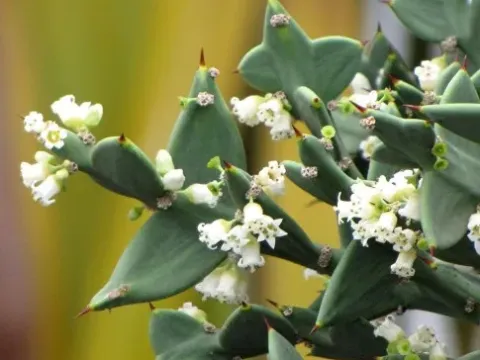
The most striking botanical feature of Colletia is its adaptation to drought; the plant is largely leafless or possesses tiny, ephemeral leaves. Photosynthesis is carried out primarily by its rigid, spine-tipped branches, which form an impenetrable and architectural structure that makes the plant highly ornamental.
To successfully cultivate Colletia, one must provide a soil medium that is exceptionally well-draining, such as a mixture designed for cacti or succulents. Any stagnation of water around the root system will quickly lead to failure, making the drainage layer an essential component of planting.
Colletia plants require full sun exposure and warm temperatures. They are not fully hardy in colder climates and are best treated as container plants in regions where temperatures drop significantly below freezing, allowing them to be moved to a frost-free environment during the winter.
Cultural maintenance is straightforward: water only when the substrate has dried out completely. During the dormant winter phase, keep the plant in a cool, bright location with minimal irrigation to prevent etiolation and maintain the compact, dense growth habit that defines this genus.
The primary threat to Colletia is root rot, which occurs when the soil remains too wet for an extended period. This condition is difficult to reverse, emphasizing the importance of a strict watering schedule and excellent aeration of the growing medium throughout the year.
Pests, particularly spider mites and mealybugs, are common threats in greenhouse or indoor environments. These insects find the dense, thorny structure of the branches to be an ideal hiding place, making early detection and regular monitoring vital for maintaining plant health.
When pests are detected, the use of systemic insecticides or targeted applications of neem oil can be effective. Because the foliage is minimal, it is relatively easy to treat the entire surface of the plant compared to broader-leaved species, provided the thorns do not hinder access.
Physical damage to the stems should be avoided as it compromises the plant's structural integrity and leaves it vulnerable to opportunistic fungal pathogens. If pruning is necessary, always use clean, sterilized tools to prevent the introduction of harmful bacteria into the plant's vascular system.
Promoting good airflow around the specimen is the most effective preventative measure against fungal infections. Keeping the plant in a well-ventilated area helps the stems dry out quickly after irrigation and discourages the establishment of common greenhouse pathogens.