
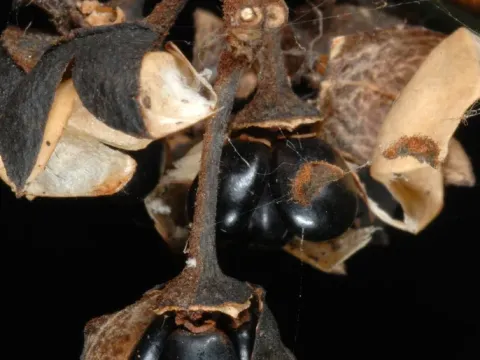
Colubrina
Colubrina Rich. ex Brongn.
The genus Colubrina belongs to the Rhamnaceae family and consists of shrubs and small trees native to tropical and subtropical regions of the Americas. These plants are known for their resilience in various environments, ranging from coastal areas to dry forests.
What the section contains
Colubrina
Successful cultivation requires well-draining soil, ideally sandy or loamy, as these plants are highly intolerant of waterlogged conditions. Proper site selection should prioritize areas with good air circulation and sufficient sunlight, as most species in this genus are light-demanding.
Climate requirements for Colubrina involve warm temperatures throughout the year. While they can tolerate some drought once established, young specimens require consistent moisture to develop a strong root system before they can fully adapt to drier conditions.
Agronomic practices include regular pruning to maintain plant shape and density, which is particularly useful for nursery production or landscaping. Fertilization should be balanced, focusing on promoting healthy foliage growth without excessive lushness that might attract pests.
Economically, Colubrina species are used for their durable wood in local construction, while some species are valued as honey plants. Their potential for phytochemical production remains a subject of ongoing research, focusing on the medicinal properties found in their leaves and bark.
The most common pests affecting Colubrina are spider mites and scale insects, which typically thrive in dry conditions. Implementing integrated pest management, including regular washing of leaves and localized treatments, is essential to maintain plant vigor.
Fungal diseases, such as leaf spot and root decay, are significant threats caused by poor humidity management. Ensuring adequate spacing between plants and avoiding overhead irrigation can significantly reduce the incidence of these pathogens in field conditions.