
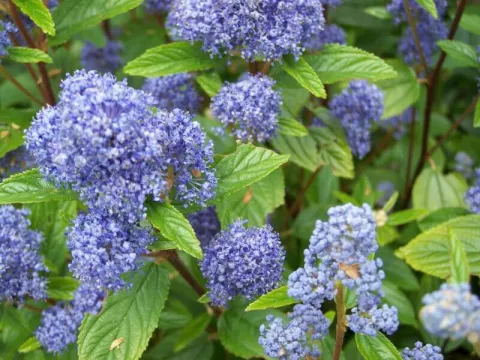
Ceanothus delilianus
Ceanothus delilianus
Ceanothus delilianus is a notable hybrid shrub belonging to the Rhamnaceae family. It is widely recognized in ornamental horticulture for its spectacular blue flower clusters that bloom during the summer months, providing a unique aesthetic to garden landscapes.
What the section contains
Ceanothus delilianus
The plant originates from cross-breeding European cultivated forms with North American species. It is best suited for temperate climates, requiring a sunny, sheltered position to thrive while needing protection against harsh, desiccating winter winds.
Regarding soil requirements, this species demands well-draining, slightly acidic to neutral soil. It is highly intolerant of waterlogged conditions, which makes sandy or loamy soils with good aeration the ideal medium for root development.
Agrotechnical practices focus on moderate watering during the growing season and ensuring the plant receives full sun. Fertilization should be kept at a moderate level, typically applied in early spring to support the development of new flowering wood.
Pruning is essential for maintaining the health and vigor of Ceanothus. It is recommended to perform structural pruning in early spring to remove dead wood and encourage dense growth, which ultimately results in a more prolific display of flowers.
The main insect threats include scale insects and aphids, which can weaken the plant by feeding on the sap of young stems. Integrated pest management strategies, including the use of horticultural oils or soaps, are often sufficient for control.
Root rot is the most common disease, caused primarily by poor soil drainage and excessive moisture. To mitigate this risk, it is crucial to ensure excellent drainage at the time of planting and avoid over-irrigating the root zone during cool, damp weather.