
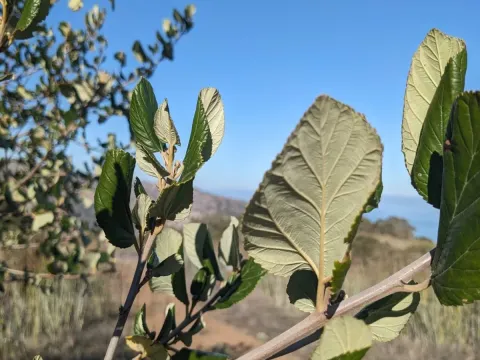
Ceanothus arboreus
Ceanothus arboreus
Ceanothus arboreus, commonly known as the island ceanothus or feltleaf ceanothus, is a robust evergreen shrub or small tree belonging to the Rhamnaceae family. Native to the California Channel Islands, it thrives in Mediterranean-type climates with mild, frost-free winters.
What the section contains
Ceanothus arboreus
The botanical profile of this species includes broad, leathery leaves with a distinct veined texture and large, fragrant panicles of blue to lavender flowers. In its natural habitat, it can reach impressive heights, often functioning as a fast-growing ornamental tree.
Successful cultivation requires full sun exposure and well-draining soil. While the species is noted for its drought tolerance once established, it prefers a site protected from strong, desiccating winds to maintain the structural integrity and health of its evergreen canopy.
Regarding soil preferences, it performs best in neutral to slightly acidic soils with low clay content. Avoid heavy water retention, as the root system is highly susceptible to rot if subjected to constant saturation, especially during the dormant winter months.
In landscaping and agriculture, it is primarily used for ornamental purposes, such as large screens, windbreaks, or as a focal specimen in xeriscaped gardens where its vibrant blooms can attract local pollinators, including bees and butterflies.
Root rot, primarily caused by Phytophthora species, is the most critical threat to Ceanothus arboreus. It is almost always a result of excessive soil moisture or poor drainage conditions combined with warm soil temperatures.
Pest issues often include scale insects and mealybugs, which cluster on the stems and undersides of leaves. These pests weaken the plant and excrete honeydew, which encourages the growth of unsightly sooty mold on the foliage.
During hot and dry spells, spider mites may become problematic, causing stippling and discolouration on the leaves. Regular inspection of the foliage is necessary to detect early signs of infestation before significant damage occurs.
Cultural control remains the most effective defense: ensure adequate spacing between plants to promote airflow and avoid overhead irrigation, which can exacerbate fungal leaf spot issues.
If chemical intervention becomes necessary, use targeted treatments for scale and mites during the active growing season, and apply systemic fungicides only as a last resort for severe fungal outbreaks.