
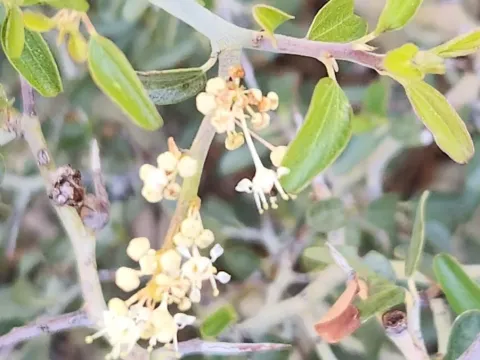
Ceanothus cordulatus
Ceanothus cordulatus
Ceanothus cordulatus, commonly known as mountain whitethorn or snowbush, is a resilient shrub belonging to the Rhamnaceae family. It is native to the mountain ranges of California, where it thrives in diverse and rugged landscapes.
What the section contains
Ceanothus cordulatus
The plant is known for its ability to stabilize slopes and adapt to nutrient-poor soils. When cultivating this species, it is essential to provide well-draining soil, such as rocky or sandy loam, to mimic its natural mountainous habitat.
This shrub requires full sun exposure to reach its full potential. Adequate sunlight is crucial for the development of its characteristic white flowers and for maintaining the density of its intricate branch structure.
Climate requirements for this plant focus on cool to moderate winter temperatures and dry summers. It is remarkably drought-tolerant once established, requiring minimal supplemental irrigation after the first two seasons.
Proper spacing is important when planting Ceanothus cordulatus to ensure sufficient airflow. Overcrowding can lead to humidity pockets that create unfavorable conditions for this mountain-adapted species.
The primary threat to the health of Ceanothus cordulatus is root rot caused by poor soil drainage. If the soil remains saturated for long periods, the root system is highly susceptible to fungal pathogens.
Pests such as scale insects and aphids may occasionally infest young stems during the spring growth phase. Monitoring the plants during the early season is a recommended practice to avoid significant damage.
Powdery mildew is a potential issue in regions with high humidity and poor air circulation. Improving the airflow by selective pruning can effectively prevent this common fungal problem.
Over-fertilization is an unintended threat that can cause the plant to produce too much leafy growth, making it prone to breakage and reducing its natural resilience to environmental stress.
Mechanical injury to the root collar during gardening activities can introduce pathogens that compromise the long-term viability of the shrub. Always use caution when weeding near the plant base.