
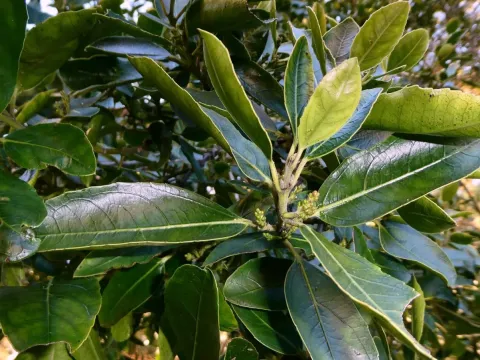
Italian buckthorn
Rhamnus alaternus
Italian buckthorn (Rhamnus alaternus) is an evergreen shrub or small tree belonging to the Rhamnaceae family. Native to the Mediterranean Basin, it is widely valued for its dense, glossy foliage and robust growth habit in warm climates.
What the section contains
Italian buckthorn
Botanically, the plant features alternate, leathery leaves and inconspicuous yellowish-green flowers that bloom in spring. Following pollination, the plant produces fleshy, dark-colored drupes that provide food for local bird populations.
This species thrives in full sun but can tolerate partial shade. It is highly drought-tolerant once established, making it an excellent choice for low-maintenance landscaping and Mediterranean-style gardens.
Soil requirements are relatively undemanding, provided the substrate is well-draining. The plant prefers neutral to slightly alkaline pH levels and will not thrive in waterlogged or heavy clay soils prone to compaction.
Cultivation practices involve minimal pruning, mostly for shape retention, and occasional irrigation during the first growing season to ensure deep root establishment in the local soil profile.
Major threats to Rhamnus alaternus include fungal infections like leaf spot or powdery mildew, which typically occur in environments with poor air circulation or excessive humidity levels.
Pests such as aphids and scale insects are known to infest the plant, particularly during the tender growth stages in early spring, necessitating effective monitoring and control.
Root rot is a critical concern, usually resulting from improper drainage or over-irrigation. Maintaining a balance in moisture is crucial to prevent the decay of the root system.
Sustainable pest management should prioritize cultural practices, such as ensuring adequate spacing between plants to allow for natural aeration and reducing the need for chemical intervention.
In cases of heavy infestation, using horticultural oils or systemic insecticides can help manage pest populations effectively while preventing long-term damage to the plant structure.