
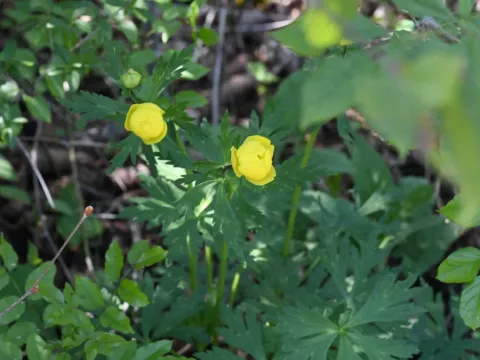
Globe-flower
Trollius europaeus
The sowing of Trollius europaeus seeds is best performed in late autumn, as the seeds require a period of cold stratification to break dormancy successfully.
What the section contains
Globe-flower
Freshly collected seeds provide the highest germination rates, whereas dry-stored seeds may remain dormant for an extended period or fail to sprout entirely.
For spring planting, seeds must undergo artificial stratification in a controlled environment at temperatures between 2 and 4 degrees Celsius for at least two months.
The planting depth should be shallow, generally around 0.5 to 1 centimeter, ensuring the soil medium remains consistently moist throughout the emergence period.
Growers should maintain patience during the germination phase, as seedlings often appear in inconsistent waves rather than simultaneously across the seedbed.
As a member of the Ranunculaceae family, the globe-flower thrives in cool, moist climates and is highly regarded for its aesthetic value in landscape design.
It prefers rich, loamy soils with a high organic matter content that can hold moisture without becoming waterlogged or prone to stagnant conditions.
The natural habitat of the species extends across European regions, where it adapts well to both sunny meadows and the dappled shade of forest edges.
Adequate water management is essential for the health of the plant, especially during hot summer periods when the roots can suffer from drought stress.
It is a hardy perennial, capable of surviving harsh winters with minimal human intervention, provided that the soil conditions are suitable for its root structure.
Fungal diseases are the primary concern for Trollius europaeus, especially powdery mildew, which thrives in high humidity and poorly ventilated environments.
Leaf miners and other sap-sucking insects may cause cosmetic and physiological damage, leading to weakened plants and increased susceptibility to secondary infections.
Integrated pest management, including regular inspection and the use of targeted fungicides, is recommended to prevent significant outbreaks.
Removing dead or decaying plant material at the end of the season is a critical step in reducing the pathogen load in the growing area.
- Maintain appropriate spacing to promote optimal airflow between plants.
- Monitor the underside of leaves for signs of insect activity.
- Avoid over-fertilization, which can encourage soft, disease-prone growth.
When grown for ornamental purposes, the flower stems should be harvested when the buds are well-developed and show color but have not yet fully opened.
Seed collection for propagation purposes must be performed just before the follicles open to prevent natural dispersal and ensure high-quality genetic material.
Flowers intended for indoor displays should be placed in cool, clean water immediately after cutting to maximize their vase life.
Post-harvest management involves trimming the foliage back to just above the soil surface after the plant has entered its natural autumn dormancy.
This pruning practice helps the plant channel energy into the root system, ensuring robust growth and consistent flowering for the following year.