
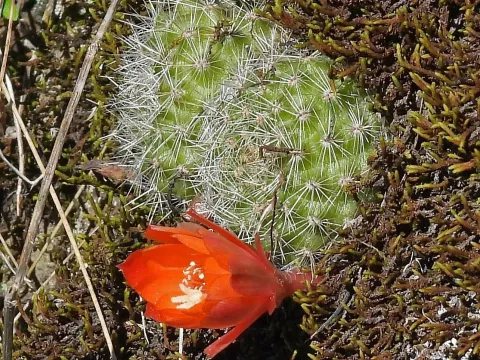
Rebutia fiebrigii
Rebutia fiebrigii
Rebutia fiebrigii is a popular ornamental cactus species belonging to the Cactaceae family, native to the high-altitude regions of Bolivia and Argentina. It is widely recognized for its globose, clumping growth habit and its spectacular, abundant flowering patterns.
What the section contains
Rebutia fiebrigii
Optimal growth requires a location with bright, indirect sunlight or filtered light. While these plants appreciate sun, protecting them from harsh midday summer sun is crucial to prevent epidermis damage and dehydration of the succulent stem.
The substrate must be highly porous and well-draining to mimic the plant's natural rocky habitat. A standard cactus mix supplemented with grit, pumice, or coarse sand is recommended to ensure rapid moisture drainage and good root aeration.
Cultivation practices involve distinct seasonal cycles. During the growing season (spring and summer), the soil should be kept lightly moist, while the dormant winter phase requires almost total dryness and cool temperatures to trigger successful spring blooming.
Fertilization should be applied sparingly, using a low-nitrogen, high-potassium cactus fertilizer during the active growing season. Over-fertilization can result in weak, etiolated growth that makes the cactus prone to breakage and disease.
The most significant threat to Rebutia fiebrigii is overwatering, which quickly leads to root rot and collar rot. Because the root system is relatively delicate, excess moisture in the soil is often fatal for the specimen.
Red spider mites are the most common pest, especially in dry and poorly ventilated indoor environments. These pests cause discoloration of the epidermis and can severely damage the plant's aesthetic value if left untreated.
Mealybugs can infest the clusters of the plant, hiding between the spines where they are difficult to spot. Their presence is often indicated by white, cotton-like masses, requiring treatment with systemic insecticides or horticultural oils.
Fungal infections can appear as dark, soft spots on the plant body due to high humidity levels or poor air circulation. Removing the infected area and applying a fungicide or sulfur powder can help save the plant if caught early.
Maintaining a clean growing environment and monitoring the plant for any signs of stress or pest presence are vital. Proper spacing between plants and adequate airflow are key to preventing the spread of common cactus diseases.