
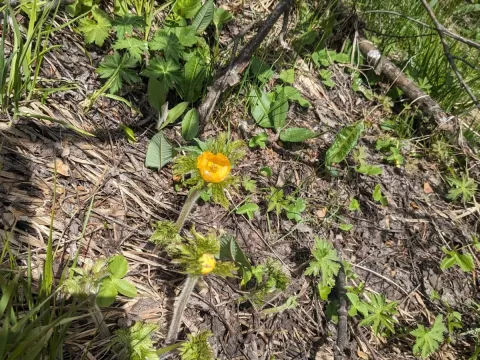
Golden pasqueflower
Pulsatilla aurea
The Golden pasqueflower (Pulsatilla aurea) is a perennial herbaceous plant belonging to the Ranunculaceae family. It is an alpine species naturally occurring in high-mountain meadows, known for its distinct golden-yellow bell-shaped flowers.
What the section contains
Golden pasqueflower
Botanically, the plant is distinguished by a thick rootstock and dense pubescence, which serves as a natural mechanism to retain moisture in extreme mountain environments. This species is highly adapted to short growing seasons and intense solar radiation.
The cultural success of Pulsatilla aurea depends on providing well-drained, gritty, or rocky soil with a neutral to slightly alkaline pH. The plant is extremely sensitive to waterlogging, which often results in root rot if the drainage is insufficient.
Climate requirements include cold winters and cool, well-ventilated summers. It is considered a drought-tolerant plant once established, but it requires regular monitoring during the first year after planting to ensure deep root development.
Cultivation practices involve minimal disturbance of the root system, as this plant generally does not tolerate transplanting well. Propagation is best achieved through fresh seed sown in autumn to allow for natural stratification throughout the winter.
Pulsatilla aurea is susceptible to several fungal diseases, particularly gray mold (Botrytis cinerea), which thrives in stagnant, humid air. Proper spacing and airflow are critical strategies to mitigate this threat.
Root system pests, including various larvae and nematodes, present a significant challenge. These pests can compromise the integrity of the primary root, leading to a sudden decline in plant health and potential death.
Leaf-spot diseases may occur during late summer, manifesting as dark lesions on the foliage. If left untreated, these infections can significantly weaken the plant's ability to store energy for the subsequent flowering cycle.
Gastropods such as slugs and snails are problematic for young seedlings. Preventive measures include the application of copper-based barriers or organic baits to protect the vulnerable growth points during the spring season.
Integrated pest management, including monitoring and early detection, is recommended to keep the plants healthy. Avoid over-fertilization, as high nitrogen levels encourage weak growth that is more prone to aphid infestations and fungal attacks.