
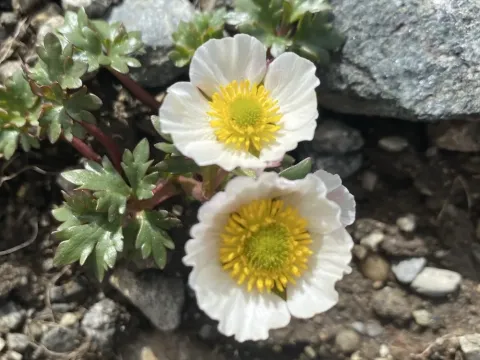
Glacier buttercup
Ranunculus glacialis
Glacier buttercup is a perennial herbaceous plant belonging to the Ranunculaceae family. It is a specialized alpine species capable of surviving in the harsh environmental conditions of the high mountains and arctic regions.
What the section contains
Glacier buttercup
The plant originates from the mountainous areas of Europe, including the Alps, Carpathians, and Arctic regions. It prefers stony slopes, moraines, and rocky substrates where the soil is acidic and provides excellent drainage for its delicate root system.
Regarding its requirements, the species demands high light intensity, cool temperatures, and constant atmospheric moisture. It struggles significantly in lowland climates due to heat sensitivity and the lack of proper acclimatization to lower elevations.
Botanically, the plant is characterized by a low-growing habit with leathery, dark green leaves. Its flowers show a unique color transition, starting as white and often turning deep pink or red as they mature, which helps in thermoregulation and attracting insects.
In terms of economic use, it is grown primarily for specialized horticultural purposes and botanical conservation. It does not possess value as a food crop or industrial plant but remains a high-interest subject for alpine garden enthusiasts and botanical researchers.
The main threats to the plant include fungal diseases, specifically those affecting roots due to inadequate soil drainage. In cultivation, improper irrigation practices lead to rapid decay of the plant during periods of high ambient temperature.
Common pests that might affect these plants in greenhouse or garden settings include spider mites and various aphids. Protecting the plant involves maintaining a clean environment and ensuring that the substrate mimics natural mountain conditions as closely as possible.