
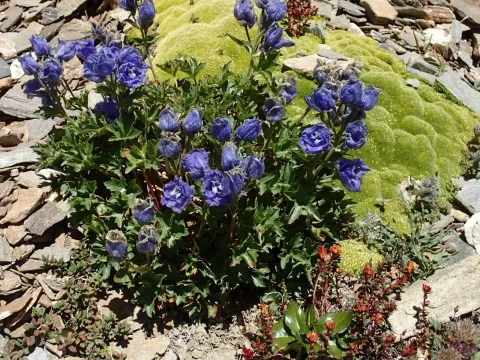
Glacier larkspur
Delphinium glaciale
Glacier larkspur (Delphinium glaciale) belongs to the Ranunculaceae family. It is a specialized alpine plant species native to the harsh, high-altitude regions of the Himalayas and the Tibetan Plateau, flourishing in areas where most vegetation cannot survive.
What the section contains
Glacier larkspur
The plant is characterized by its distinct dwarf form and dense hairiness on its leaves and stems, which acts as a protective layer against intense solar radiation and high-velocity winds. This morphological adaptation allows it to thrive in extremely cold, nutrient-poor, rocky environments.
Requirements for growth are strictly defined by its native alpine habitat. It requires exceptional drainage, cold temperatures, and specific light levels to initiate the development of its blue or purple floral parts, which are adapted for pollination by high-altitude insects.
Agricultural techniques for this species are limited to specialized botanical horticulture. Successful cultivation requires strict temperature management and the use of inert substrates that mirror the mineral-heavy, impoverished soil found in glacier-adjacent slopes.
The economic and research significance of this culture lies in its genetic potential. It serves as a study model for cold-hardiness and environmental resilience, offering valuable traits for future breeding programs in ornamental horticulture for northern climates.
The primary threats to the species are fungal pathogens caused by improper drainage and humidity levels. In controlled environments, root rot is the most common cause of failure, as the plant cannot tolerate stagnant water around its crown.
While the plant is largely immune to traditional pests in its native habitat, greenhouse cultivation can invite spider mites. Maintaining cool, dry airflow is essential to prevent these infestations and ensure the longevity of the plant in a non-native landscape.