
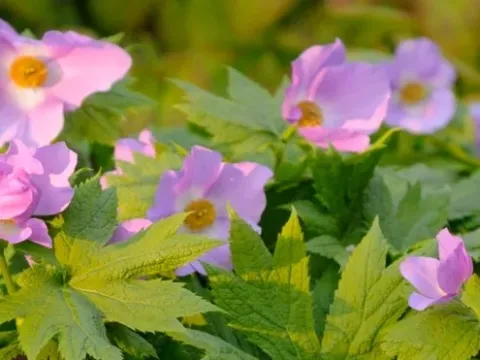
Glaucidium
Glaucidium
Glaucidium is a genus of perennial herbaceous plants belonging to the Ranunculaceae family. It is highly prized in specialized gardening circles for its elegant, deeply lobed leaves and solitary, pale lavender flowers that resemble poppies.
What the section contains

Glaucidium
Native to the mountain forests of East Asia, particularly Japan, the plant has evolved to thrive in cool, moist, and shady environments. Understanding this natural habitat is crucial for achieving success in garden cultivation.
The primary requirement for Glaucidium is a site with consistent shade or dappled light. Intense, direct sun must be avoided at all costs, as the delicate foliage will wither and turn brown under high light and temperature exposure.
Soil quality is paramount; it should be rich in organic matter, acidic, and exceptionally well-draining. Incorporating leaf mold, compost, and small grit into the planting hole ensures the roots receive the necessary air and moisture balance.
Maintenance involves providing consistent hydration throughout the growing season. The plant thrives in environments with high ambient humidity, making it a perfect candidate for woodland garden settings near water features or shaded slopes.
Slugs and snails are the most significant pests for Glaucidium, as they are attracted to the soft, succulent foliage. Implementing physical barriers or organic baits around the base of the plant is highly recommended during the spring growth phase.
Root rot is a major threat caused by stagnant water or compacted soil. Ensuring a deep, well-draining substrate is the most effective preventative measure against fungal pathogens that target the root crown.
Fungal leaf spot diseases can occur during periods of high humidity and poor air circulation. Removing affected leaves and improving airflow in the planting area can help contain the spread of such infections.
Physical damage to the brittle root system should be avoided, as it weakens the plant's natural resistance to soil-borne bacteria. Avoid cultivating the ground immediately surrounding the plant to prevent accidental root cuts.
Periodic monitoring for early signs of distress is essential for long-term health. If disease symptoms persist, targeted systemic fungicides may be used, though preventative care remains the gold standard for this delicate perennial.