
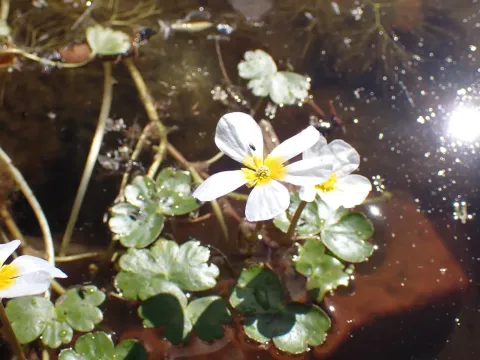
Pond water-crowfoot
Ranunculus peltatus
Pond water-crowfoot (Ranunculus peltatus) is a perennial aquatic plant classified within the Ranunculaceae family. It is typically found in freshwater habitats, where it serves as a critical biological component of the aquatic ecosystem.
What the section contains
Pond water-crowfoot
The plant is native to a broad range spanning Europe and North Africa. It thrives primarily in still or slow-moving waters, such as ponds, ditches, and calm river sections where the current does not dislodge the roots.
Regarding site requirements, the plant necessitates clean water with adequate light penetration. High turbidity caused by sediment or algal blooms significantly hinders its ability to synthesize energy and maintain healthy growth.
The substrate at the bottom of the water body should consist of fine silt or organic-rich mud. This foundation allows the plant to anchor effectively and access the mineral nutrients dissolved in the sediment layer.
Environmental stability is essential for the species. It prefers temperate conditions and is highly sensitive to extreme fluctuations in water chemistry, including excessive salt content or severe pollution levels.
The main threats to the survival of Ranunculus peltatus include chemical runoff from surrounding agricultural lands, which elevates nutrient levels and causes destructive algal growth.
Several species of aquatic mollusks and insect larvae feed on the floating and submerged leaves, which can cause severe foliage loss if the pest population remains unchecked during the peak season.
Fungal infections often occur in stagnant conditions where water circulation is insufficient. These pathogens target the stems and can lead to rapid decay of the entire vegetative mass.
Habitat loss through drainage or major changes in water depth directly threatens the plant's ability to survive, as it requires a specific depth range to remain submerged but reachable by light.
Competition for resources from more aggressive invasive aquatic weeds often leads to the displacement of the pond water-crowfoot from its preferred habitats in natural water systems.