
Plane-leaved buttercup
Ranunculus platanifolius
Description
Growing requirements
The plane-leaved buttercup (Ranunculus platanifolius) is a perennial herbaceous plant belonging to the Ranunculaceae family. It is native to the mountainous regions of Europe, where it typically inhabits humid forest edges and alpine meadows characterized by rich, damp soils.
Regarding soil requirements, this species thrives in fertile, well-draining, and humus-rich substrates. It is particularly sensitive to soil compaction and waterlogging; therefore, incorporating organic matter or compost is recommended to ensure the roots receive adequate aeration while maintaining constant moisture.
This buttercup demands a cool, temperate climate and performs best in partial shade. Excessive heat and direct sunlight can be detrimental, causing the broad, maple-like leaves to wilt. In a garden setting, it should be placed in areas that simulate its natural woodland habitat.
Agrotechnical maintenance involves regular, light irrigation to keep the root ball from drying out entirely. During the growing season, a layer of mulch is essential to maintain soil temperature stability and suppress weed growth. Propagation is primarily done via seeds or division of the root clump in early spring.
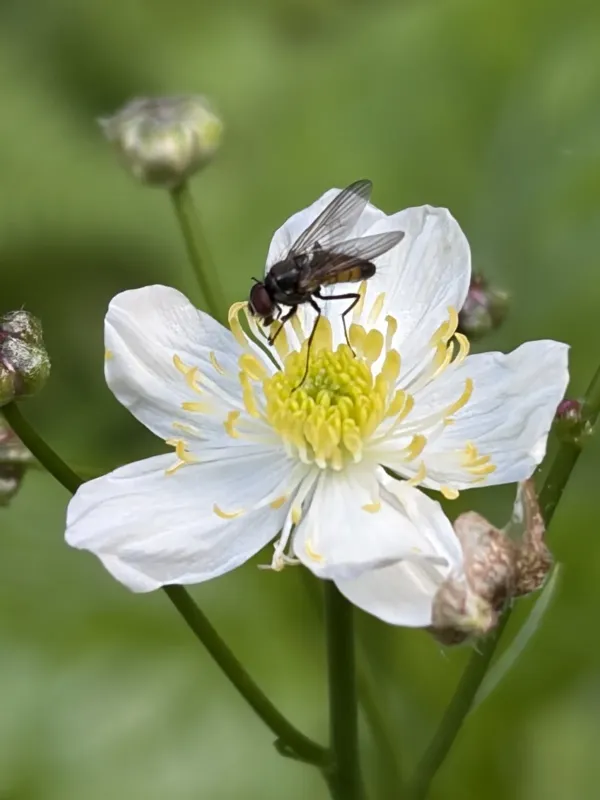
The economic and horticultural value of Ranunculus platanifolius is found in its aesthetic appeal. It is highly prized by landscape gardeners for its elegant foliage structure and delicate white flowers. While it is rarely used in large-scale agriculture, it serves as an excellent ornamental plant for shady borders and wild garden designs.
Main diseases and pests
The primary health threats to this plant include fungal diseases such as powdery mildew, which thrive in stagnant, humid environments. To mitigate this risk, it is essential to ensure adequate plant spacing and proper air circulation within the planting site.
Pests such as aphids and leaf miners can occasionally infest the foliage, reducing the ornamental value of the plant. Integrated pest management, including regular inspection and the use of insecticidal soaps when necessary, is the recommended approach to maintaining a healthy crop of these buttercups.