
Pitcher's clematis
Clematis pitcheri
Pitcher's clematis is a perennial woody vine belonging to the Ranunculaceae family. Native to the central and southern United States, this species thrives in diverse habitats including open woodlands and riverbanks, known for its robust nature and distinct appearance.
What the section contains
Pitcher's clematis
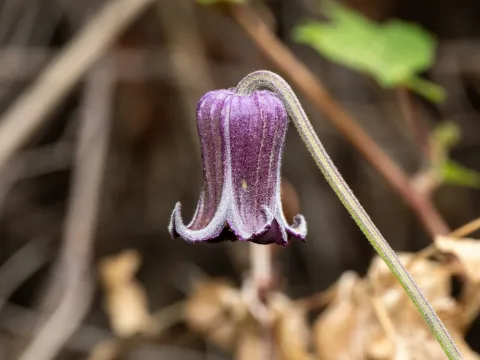
Botanically, the plant is identified by its climbing habit, reaching heights of 3 to 4 meters, and its bipinnate leaves. The most striking feature is its bell-shaped flowers, which feature thick, leathery sepals that curl outwards at the tips, typically colored in shades of dark purple or violet-brown.
This species performs best in locations that offer full sun to partial shade. The soil should be fertile, well-draining, and slightly alkaline or neutral, which ensures healthy root development and prevents issues associated with compacted or waterlogged ground.
Cultivation requires consistent moisture throughout the growing season, especially for younger plants. Providing a sturdy trellis, fence, or arbor is essential, as the plant relies on its petioles to coil around vertical support structures to grow.
In landscaping, Pitcher's clematis is highly valued for its ornamental appeal. It is commonly used for screening, covering pergolas, or climbing over old shrubs, adding a unique vertical textural element to any traditional or native-focused garden design.
The most significant pathological threat to this vine is clematis wilt, a fungal condition that can cause rapid wilting and death of stems, especially in conditions of poor air circulation and high humidity.
Common insect pests include aphids and spider mites. Aphids tend to congregate on new growth and flower buds, while spider mites damage leaves, often leaving a fine webbing and yellowing spots during hot, dry weather.
Preventive care involves proper site selection to ensure good airflow and spacing between plants. Regular inspection of the foliage is crucial for early detection of any pest or disease activity.
Fungicidal sprays are effective as a preventive measure in the early spring, while insecticidal soaps or neem oil can manage aphid and mite infestations without harsh chemical residues.
Maintaining a clean garden bed by removing old debris around the base of the plant significantly reduces the overwintering sites for many pathogens and insect pests.