
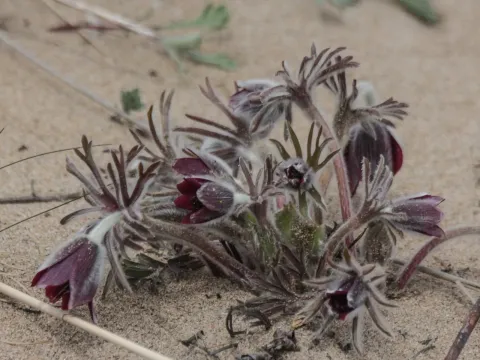
Pulsatilla cernua
Pulsatilla cernua
Sowing seeds of Pulsatilla cernua should be carried out immediately after harvest in the summer to ensure maximum germination rates. In controlled environments, seeds are sown on the surface of a light substrate and only lightly covered with sand.
What the section contains
Pulsatilla cernua
For spring sowing, cold stratification is required for at least 1-2 months to break seed dormancy. This mimics natural environmental cycles and significantly improves the success rate of seedling emergence in a nursery setting.
The substrate must be light, porous, and well-draining to prevent damping off, which is a common issue for young seedlings. A mixture of peat, sand, and leaf mold in equal proportions is highly recommended for optimal root development.
Careful handling during transplanting is crucial because the plant develops a long taproot that is highly sensitive to disturbance. It is best to sow in individual pots or cells to avoid root damage during the later transition to the garden.
Transplanting to the permanent location should be done in late summer or the following spring. It is vital to ensure the soil structure in the garden matches the drainage requirements of the container-grown plants.
Pulsatilla cernua belongs to the Ranunculaceae family and is recognized as a hardy herbaceous perennial. Its native distribution spans across East Asia, where it thrives in open, high-light environments with moderate temperatures.
The plant requires full sun to light shade to bloom effectively, as the nodding flowers prefer to develop under cool, breezy conditions. Avoid locations that stay waterlogged, as the species is prone to crown rot in heavy soils.
Ideal soil for cultivation is well-drained, sandy loam with a neutral to slightly alkaline pH. Adding organic amendments is acceptable, but the primary focus should remain on maintaining excellent drainage and aeration around the root zone.
This species is exceptionally cold-hardy and can withstand freezing winters well. In regions with minimal snow cover, providing a layer of mulch around the base of the plant can offer additional protection against rapid freeze-thaw cycles.
Maintenance is minimal, focusing on light weeding and avoiding soil compaction around the base of the plant. Pulsatilla cernua is a long-lived perennial that does not require frequent division or fertilization if the initial site conditions are correct.
Root rot is the most significant threat to the health of Pulsatilla cernua, primarily caused by excessive moisture or soil compaction. Improving the drainage of the planting site is the best long-term preventive measure.
Powdery mildew can occasionally appear during humid or stagnant weather conditions. Proper air circulation and keeping the foliage dry when watering are effective strategies to prevent the spread of fungal spores.
Slugs and snails often target new foliage in the spring, which can stunt the plant's growth. Physical barriers or eco-friendly bait traps are recommended to protect the emerging shoots from grazing.
Aphids can sometimes infest the flower stalks during the early growth phase. If discovered, a gentle spray of water or an application of insecticidal soap is usually sufficient to clear the infestation without harming the plant.
Gardeners should note that all parts of the plant are considered toxic if ingested and can cause skin irritation upon contact. Always use gardening gloves when pruning or transplanting to ensure personal safety.