
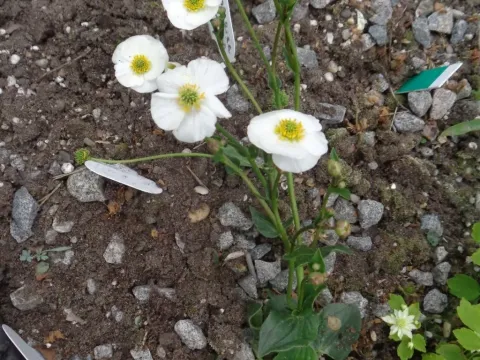
Parnassia-leaved buttercup
Ranunculus parnassifolius
The Parnassia-leaved buttercup (Ranunculus parnassifolius) is a botanical member of the Ranunculaceae family. This species is indigenous to the mountainous regions of Europe, particularly the Alps and Pyrenees, where it thrives on limestone screes and rocky slopes.
What the section contains
Parnassia-leaved buttercup
As an alpine specialist, this plant demands strict environmental conditions for survival. It requires a cool, high-altitude climate and is highly intolerant to heat stress, humidity fluctuations, and stagnant moisture during the growing season.
For cultivation, the substrate must be exceptionally well-drained and gritty. A limestone-based mineral soil mix is preferred to mimic its natural habitat. Adequate aeration of the root system is essential to prevent physiological decline in container or rock garden settings.
Botanically, it is characterized by its distinct, thick, heart-shaped leaves and large, striking white or pale pink flowers. The plant maintains a compact habit, which is an evolutionary adaptation to survive the harsh, wind-swept environments of its native range.
In professional horticulture, this plant is treated as a high-value collector's item for alpine gardens. It serves primarily a decorative purpose, providing an authentic alpine aesthetic in specialized rock garden landscaping projects.
The primary threats include root rot and crown rot, which are often triggered by improper moisture management. Ensuring perfect drainage is the most critical aspect of the plant's husbandry to prevent fungal infections.
Insect pests such as aphids may occasionally infest the developing buds. Furthermore, in open garden settings, slugs and snails pose a constant threat, often causing significant damage to the foliage during moist weather conditions.