
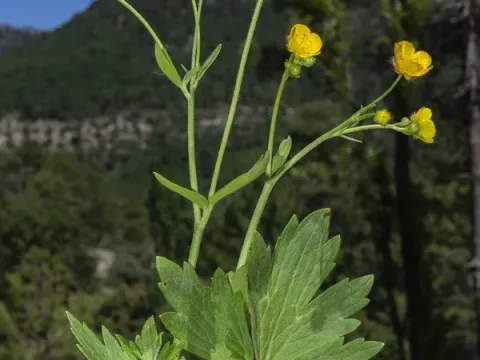
Granada buttercup
Ranunculus granatensis
The Granada buttercup (Ranunculus granatensis) is a perennial herbaceous plant belonging to the Ranunculaceae family. It is a rare endemic species primarily distributed in the high-mountain regions of southern Spain, specifically within the Sierra Nevada mountain range.
What the section contains
Granada buttercup
This plant prefers humid habitats such as the banks of alpine streams, marshes, and meadows with consistent water saturation. It is well-adapted to harsh mountain conditions, exhibiting vigorous growth during the brief alpine summer after the snowmelt.
For successful growth, the crop requires organic-rich, slightly acidic or neutral soils with excellent water-holding capacity. Drought sensitivity is a key characteristic of this species, making consistent soil moisture essential for its survival and development.
Botanically, it features upright stems and a robust root system that helps anchor the plant in unstable high-altitude substrates. Its leaves are often slightly pubescent, an adaptation designed to reflect intense UV radiation and minimize water loss in exposed mountain terrains.
Currently, the Granada buttercup is not grown as a commercial agricultural crop. Its value lies in its ecological importance as a mountain endemic, its potential use in specialized rock gardening, and its utility in botanical research and biodiversity conservation projects.
Significant threats to the population of the Granada buttercup include habitat degradation resulting from overgrazing by livestock. Excessive trampling leads to soil compaction, which inhibits root growth and reduces the density of plant colonies in their native range.
Like many species in the Ranunculus genus, it is susceptible to fungal infections such as powdery mildew and various rust diseases. These conditions often flare up in stagnant, humid environments where air circulation is restricted, weakening the plant's physiological state.
Pests such as certain leaf-eating beetles and aphids can significantly damage the foliage. Given the short growing season in high-altitude zones, severe pest damage can substantially reduce the plant's ability to produce seeds and recover for the next cycle.
Climate change poses a long-term risk, as rising temperatures and altered precipitation patterns threaten the specific micro-habitats this plant depends on. The reduction of wetland areas in the Sierra Nevada directly limits the viable range for the species.
Conservation strategies focus on the protection of its natural habitat and the regulation of land use, particularly in protected areas. Any efforts to cultivate the plant outside its natural range require careful replication of its specific high-altitude moisture and light conditions.