
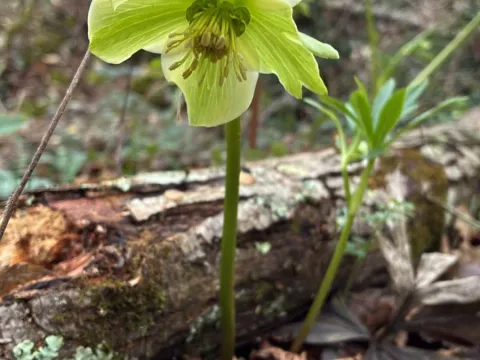
Green hellebore
Helleborus viridis
Propagation of Green hellebore is primarily achieved through seeds, which require a cold stratification period to break dormancy. Sowing should be carried out in autumn or early winter in outdoor seedbeds to allow natural temperature fluctuations.
What the section contains
Green hellebore
When sowing in containers, seeds should be kept in a cool environment for several months. Germination is notoriously slow, and it is not uncommon for seedlings to take a full season to emerge properly.
Vegetative propagation is an alternative method involving the division of established clumps. This task is best performed in early spring or late August, ensuring that each piece contains enough root mass and dormant buds for rejuvenation.
Seedlings need to be kept in a sheltered, shaded area during their first year of growth. They are sensitive to transplanting, so it is recommended to move them to their final garden position only when they have developed a strong root system.
The spacing between plants should be approximately 30–40 centimeters to allow for adequate air circulation and mature growth. Mulching around the base of the plant protects young roots from desiccation.
Green hellebore belongs to the Ranunculaceae family and is native to the woodland areas of Europe. It is a perennial plant that thrives in environments mimicking its natural forest floor habitat, characterized by diffused light and rich organic soil.
The plant performs best in neutral to slightly alkaline soils that are moisture-retentive but well-draining. It is essential to ensure that the site does not become waterlogged, as this is the primary cause of root rot in hellebore species.
Positioning the plant in partial shade is critical for its health. Beneath deciduous trees or shrubs is the ideal spot, as these plants provide shade in summer while allowing enough light in winter and spring to stimulate the flowering process.
Regular maintenance includes an annual application of compost or well-rotted leaf mold to sustain the soil structure and nutrient levels. During the active growth phase in spring, moderate watering is necessary to support flower and leaf development.
Green hellebore is hardy and can withstand low winter temperatures without special protection. However, removing old, decaying leaves before the new spring growth emerges is recommended for plant hygiene.
Black spot (Coniothyrium hellebori) is the most significant disease affecting Green hellebore. It presents as large, dark-brown or black spots on the leaves and stalks, which can eventually kill the entire plant if left untreated.
Downy mildew is another common issue, especially in environments with high humidity and poor airflow. Symptoms include stunted growth and chlorotic leaves, which require immediate removal of the affected parts.
Pests such as aphids can cluster on young buds, sapping plant vigor and potentially transmitting viruses. Leaf nematodes can also cause necrotic spots and crinkling of the foliage, necessitating chemical or biological intervention.
To minimize the risk of infections, avoid overhead watering, which creates the damp conditions that fungal spores need to germinate. Ensuring proper spacing between plants is the best preventative measure against many pathogens.
- Sanitize gardening tools after working with diseased plants.
- Remove and destroy all infected foliage during the dormant season.
- Improve soil drainage if the planting area is susceptible to puddling.