
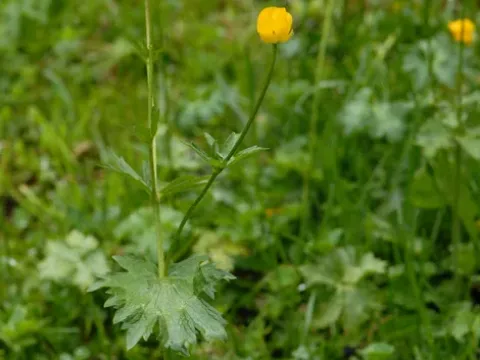
Gouan's buttercup
Ranunculus gouanii
Gouan's buttercup (Ranunculus gouanii) is a perennial herbaceous plant belonging to the Ranunculaceae family. It is natively found in mountainous regions of Europe, where it thrives in moist meadows and cool environments.
What the section contains
Gouan's buttercup
The plant features deeply lobed, basal foliage and distinctively bright yellow flowers. Its biological architecture makes it well-adapted to alpine or sub-alpine climates, where it completes its reproductive cycle during the favorable spring and summer months.
Cultivation requires fertile, well-draining soil that retains sufficient moisture without becoming waterlogged. The species prefers locations with partial shade or cool, temperate sunlight to prevent the soil from drying out rapidly during the summer season.
For optimal growth, the soil pH should be slightly acidic to neutral. Regular incorporation of organic matter improves soil texture and nutrient availability, which is essential for sustaining the vigor of the perennial rootstock.
Proper water management is the cornerstone of its agronomy. While the species is moisture-loving, the irrigation system must be designed to avoid stagnant water, which can trigger crown rot or other physiological disorders.
The primary threats to Gouan's buttercup include fungal infections such as powdery mildew and leaf spot diseases. These pathogens proliferate in high humidity and stagnant air conditions, necessitating careful spacing of plants.
Common insect pests include aphids and spider mites, which feed on the sap of tender leaves and shoots. In damp garden environments, mollusks such as slugs and snails can also cause significant damage by feeding on the foliage.
Integrated Pest Management (IPM) is recommended for long-term health. This involves the strategic use of biological controls and the application of fungicides only when necessary, based on localized disease pressure monitoring.
Preventative cultural practices, such as maintaining cleanliness in the planting area and removing plant debris, play a crucial role in reducing the survival rates of over-wintering pests and fungal spores.
Regular inspections throughout the growing season ensure early detection of infestations. Timely treatment prevents the rapid spread of threats across the planting site and minimizes the need for heavy chemical intervention.