
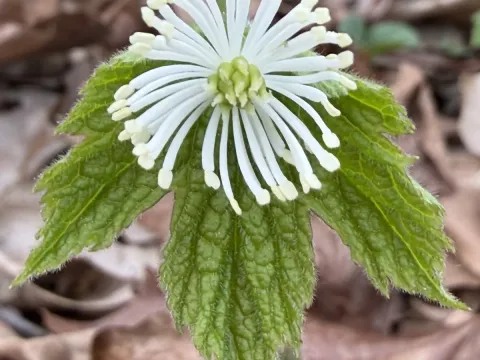
Goldenseal
Hydrastis
Growing goldenseal from seed is a slow and challenging process due to the seed's deep dormancy. Seeds require cold stratification and are typically sown in the autumn to mimic the natural winter cycle, allowing them to germinate in the following spring.
What the section contains

Goldenseal
Most commercial growers prefer vegetative propagation by dividing established rhizomes. This method is much faster and ensures a more consistent genetic quality of the crop, as each piece contains dormant buds capable of producing new shoots.
When propagating via rhizome division, the pieces should be planted early in the spring, once the soil has thawed and become workable. Each segment should contain at least one healthy bud to ensure vigorous growth.
Spacing is critical for the long-term success of the crop; rhizomes should be planted approximately 25–30 centimeters apart. Proper spacing allows for adequate airflow and root expansion, reducing the competition for nutrients.
After planting, the area should be covered with organic mulch. This helps to maintain soil moisture, suppress weeds, and regulate temperature, which is essential for the survival of the sensitive root system.
Goldenseal is a perennial herb belonging to the Ranunculaceae family, native to the deciduous forests of North America. It thrives in cool, shaded environments, making it a perfect candidate for forest farming or artificial shade structures.
The plant requires rich, well-draining soil with a high content of organic matter. A forest-like soil profile, characterized by thick leaf mold and neutral to slightly acidic pH, is ideal for maximizing both growth and alkaloid concentration.
Light management is a fundamental requirement; goldenseal needs approximately 60–70% shade to flourish. If grown in full sun, the plant will likely suffer from leaf burn, stunted growth, and dehydration, even with consistent irrigation.
Soil moisture should be kept constant but not saturated. The root system is quite delicate, and stagnant water can easily lead to root rot. Installing a reliable irrigation system is recommended for commercial operations in drier climates.
Protection from strong winds is also necessary, as the plant's broad leaves are susceptible to drying out. Utilizing windbreaks or planting in naturally sheltered low-lying areas can help maintain the required microclimate.
Goldenseal is a slow-growing crop that requires a minimum of 3 to 5 years before the first harvest. During this time, the plant focuses its energy on developing the rhizome, which is the part valued for its high berberine and hydrastine content.
The yield is often evaluated not just by the weight of the dried rhizomes, but by the potency of the phytochemicals. Consistent irrigation and soil fertility management are the primary drivers of successful commercial yields.
Farmers can increase productivity by ensuring the plants are grown in conditions that closely mimic their natural habitat. Organic amendments like compost and decomposed forest litter are more effective than synthetic fertilizers for this crop.
Total yield per hectare can vary significantly based on planting density and site suitability. Proper management of weed pressure is essential, as goldenseal does not compete well with vigorous invasive plant species.
Record-keeping of the plants' age and the inputs applied allows farmers to optimize harvest timing. Harvesting at the peak of alkaloid concentration ensures the highest market value for the dried herb.
Root rot, caused by various fungal pathogens, is the most common threat to goldenseal plantations, especially in areas with poor drainage. Once a plantation is infected, it can lead to massive losses within a single growing season.
Pests such as slugs and snails are highly attracted to the lush leaves of goldenseal and can cause significant damage if left unchecked. Barrier methods or traps are preferred over pesticides to maintain the herbal purity of the crop.
Fungal diseases like leaf blight and powdery mildew may appear if the air circulation is inadequate or if the planting density is too high. Thinning and spacing management are the best preventative measures for these conditions.
Poor crop rotation practices can lead to the build-up of soil-borne pathogens. It is advised to avoid planting goldenseal in fields previously used for other Ranunculaceae species to minimize disease transmission.
Integrated pest management (IPM) strategies, including using disease-free planting material, are essential for sustainable cultivation. Periodic monitoring of the plantation is vital for identifying issues early.
The harvest occurs in late autumn, once the foliage begins to senesce and die back. This timing indicates that the plant has translocated its nutrients and alkaloids down into the rhizomes for the winter.
The rhizomes are carefully unearthed using hand tools or mechanical diggers, ensuring minimal damage to the delicate root structures. Care must be taken to remove all loose soil while keeping the rhizomes intact.
Post-harvest, the roots must be thoroughly washed in clean water. Any damaged or decaying segments should be discarded immediately to prevent contamination of the rest of the batch.
Drying is a critical step that should be performed in a cool, well-ventilated area away from direct sunlight. High temperatures during drying can degrade the bioactive compounds, significantly lowering the market price.
Once dry, the goldenseal rhizomes should be packaged in breathable, light-proof containers. Storing them in a cool, dry place ensures the longevity of the alkaloids and protects the product from moisture damage.