
Greater meadow-rue
Thalictrum speciosissimum
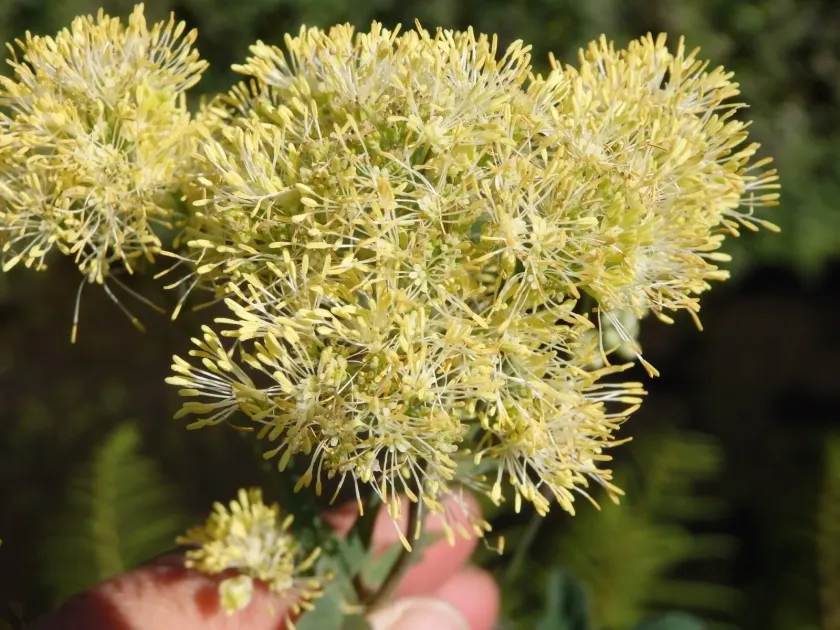
Description
Sowing dates
Sowing Greater Meadow-Rue seeds is best performed in late autumn directly into the open ground or in containers designated for cold stratification. The seeds require a period of low temperatures to break dormancy, making outdoor winter sowing a natural and effective method.
If spring sowing is planned, seeds must undergo artificial stratification in a refrigerator at temperatures between +2°C and +4°C for at least two months. This process ensures higher germination rates and more uniform seedling emergence.
Seeds should be sown on the surface and lightly covered with a thin layer of fine substrate or sand. Burying them too deep is counterproductive, as the seeds require exposure to light to trigger germination processes.
Germination is often slow and requires patience, so maintaining consistent soil moisture is crucial. During the first year, seedlings primarily focus on developing a basal rosette of leaves and building a robust root system.
When transplanting established seedlings or divisions of mature plants, allow a spacing of 40-60 cm between specimens. This distance ensures adequate space for nutrient uptake and proper airflow, which is vital for long-term plant health.
Growing requirements
Greater Meadow-Rue, scientifically known as Thalictrum speciosissimum, belongs to the Ranunculaceae family and is valued for its majestic appearance and medicinal properties. It thrives best in locations with full sun but can tolerate light shade in warmer southern regions.
The plant prefers deeply cultivated, fertile, and well-drained loamy soils. Good drainage is essential, as stagnant water in the root zone can trigger rot and other fungal complications during the growing season.
This species is highly cold-hardy and easily adapts to various climatic conditions in temperate zones. It efficiently utilizes early spring moisture to produce strong, upright stems that can reach up to 1.5 meters in height.
Regular irrigation is vital during the summer months, especially during the flowering stage, which usually occurs from June to July. Failure to provide sufficient water during this period may cause early foliage browning and aesthetic degradation.
For sustained high performance, the soil should be amended with organic matter annually. Applying compost in early spring provides the necessary nutrients for the plant to maintain vigorous growth and abundant floral display.
Main diseases and pests
The primary threats to Thalictrum speciosissimum include fungal diseases such as powdery mildew, which thrive in conditions of high humidity or poor air circulation within dense foliage.
Pests like aphids and spider mites can cause significant damage by feeding on the sap of young shoots. Controlling these populations is possible through the use of biological insecticides or mild horticultural soap solutions.
Rust diseases may also affect the leaves, appearing as characteristic orange-brown spots. Infected foliage should be removed immediately, and systemic fungicides may be applied to prevent the spread of the fungus to healthy parts.
Slugs and snails often target tender spring leaves, especially in overgrown or densely planted areas. Using gravel mulch or physical barriers can effectively protect the plants from these common garden mollusks.
Good agricultural practices are the best defense against pests and diseases. Avoiding overcrowding, ensuring proper ventilation, and maintaining a clean planting site significantly reduce the risk of pathogen outbreaks.