
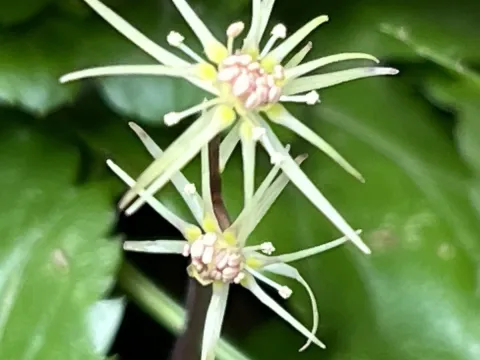
Goldthread
Coptis
Goldthread is primarily a perennial plant that thrives in woodland environments, making vegetative propagation the most efficient method for commercial setups.
What the section contains

Goldthread
Rhizomes should be divided during the early spring or late autumn when the plant is in a dormant state to minimize stress and encourage root development.
If starting from seed, it is essential to provide cold stratification to break seed dormancy; otherwise, germination rates will be extremely poor.
Seeds should be sown in a mixture of peat and forest soil, ensuring consistent moisture until the seedlings establish their initial root system.
Given the slow growth rate of the species, growers must be patient, as it often takes multiple years for the plants to reach a harvestable size.
The culture requires a shaded environment that mimics the forest floor, avoiding direct sunlight which can scorch the delicate foliage.
Well-drained, acidic soil rich in organic matter is crucial for the health of the rhizomes, which are prone to decay in heavy, waterlogged clay.
Maintaining high humidity and moisture levels is vital, as the plant cannot tolerate periods of dryness and will quickly wilt under drought conditions.
In terms of temperature, Coptis prefers cool, temperate climates, and during warmer summers, adequate mulching is necessary to keep the soil surface cool.
The planting site must have good air circulation to prevent the development of mold and fungus, which thrive in stagnant, humid environments.
Fungal diseases, particularly root rots caused by overwatering, are the primary biological threat to the productivity of a goldthread plantation.
Slugs and snails present a constant threat to the leaves, and their feeding activity can significantly weaken the plant's energy storage capacity.
Leaf spot infections can spread rapidly if the density of the planting is too high, necessitating careful monitoring and spacing of plants.
- Strict adherence to irrigation schedules to avoid soil saturation.
- Manual removal of slugs during evening hours to protect foliage.
- Removing infected plant parts immediately upon detection to stop pathogen spread.
Integrated pest management focusing on soil quality and preventative sanitation is the most effective approach for maintaining healthy crops.
Harvesting the rhizomes is a long-term commitment, typically scheduled four to six years after planting to ensure peak alkaloid content.
The harvesting process involves digging up the rhizomes during the autumn when the plant has finished its metabolic activity for the season.
Cleaning the roots is essential to remove soil debris; this is done carefully to avoid damaging the brittle golden-yellow rhizomes.
Drying is performed in controlled environments at low heat to preserve the volatile medicinal compounds that give the plant its commercial value.
Stored correctly in a cool, dry place, the dried rhizomes maintain their potency for extended periods, serving as a primary ingredient in herbal remedies.