
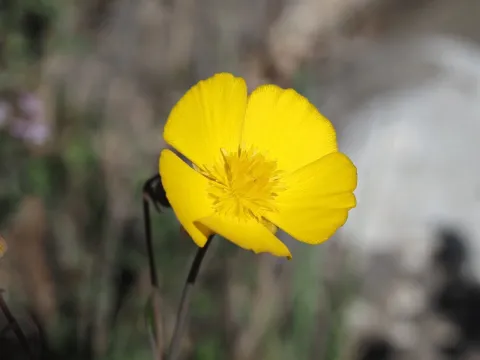
Grassy-leaved buttercup
Ranunculus gramineus
The Grassy-leaved buttercup (Ranunculus gramineus) is an elegant perennial member of the Ranunculaceae family. It is distinct for its slender, grass-like leaves, which differ significantly from the broader foliage typical of most buttercup species.
What the section contains
Grassy-leaved buttercup
Originating from Southern Europe, this plant thrives in open, rocky, and well-drained meadow habitats. Its adaptability to such conditions makes it a favorite among collectors of alpine and rock garden plants.
Soil requirements for this species are specific: it demands excellent drainage and a neutral to slightly acidic pH. Heavy clay soils should be amended with grit or sand to mimic the plant's natural environment and prevent waterlogging.
Regarding climate, the plant is remarkably hardy and prefers bright sun to light shade. It is well-suited for temperate gardens where it can undergo a natural dormancy period after its spring flowering cycle.
In terms of usage, the Grassy-leaved buttercup is strictly ornamental. Its bright yellow, cup-shaped flowers provide a vivid contrast to its glaucous, linear foliage, making it a stellar addition to rockeries and borders.
Root rot remains the most serious threat to the Grassy-leaved buttercup. It is almost exclusively caused by poorly drained soils or excessive summer rainfall that prevents the crown from drying out sufficiently.
Pests such as aphids and spider mites can occasionally affect the plant, particularly during prolonged dry spells. These pests target the new growth, potentially deforming the foliage if left uncontrolled.
Fungal issues, including various types of leaf spot and powdery mildew, can occur in poorly ventilated garden spaces. Proper spacing between individual plants is essential to encourage air circulation.
Integrated pest management suggests that gardeners should prioritize mechanical removal of weeds and debris around the base of the plant to eliminate potential breeding grounds for pathogens.
Chemical intervention should be considered a last resort. If disease pressure is high, applying systemic fungicides during the early spring may protect the plant during its most vulnerable growth phase.