
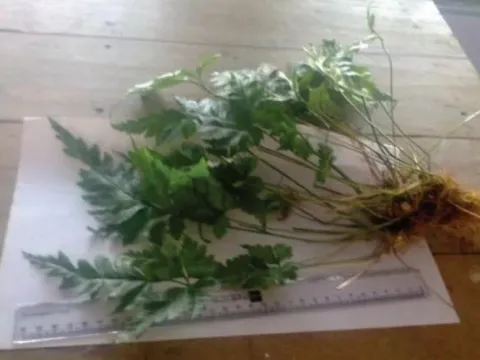
Coptis teeta
Coptis teeta
Coptis teeta is a perennial herbaceous plant belonging to the Ranunculaceae family. It is highly valued in traditional medicine for its rich content of berberine, an alkaloid with significant antibacterial and anti-inflammatory biological activity.
What the section contains
Coptis teeta
The plant originates from the high-altitude regions of the Himalayas, specifically spreading across mountainous parts of India and China. Its natural habitat is characterized by cool temperatures, high humidity, and dense forest environments.
Agronomic success depends on providing a shaded environment that mimics the forest floor. Direct sunlight causes stress to the plant, so cultivation areas are typically established under specialized shading structures or in natural woodland clearings.
The soil must be rich in organic matter, slightly acidic, and highly porous to ensure excellent drainage. Waterlogged soil is detrimental to the plant's health, as it promotes root rot and inhibits the development of the rhizomes.
Growth is notably slow, requiring patient management. Farmers often focus on maintaining a consistent microclimate with stable moisture levels throughout the year to support the long vegetative cycles required for high-quality production.
The harvest primarily involves the rhizomes, which are the main repository of medicinal alkaloids. Because Coptis teeta grows slowly, the maturation process is lengthy, usually requiring five to seven years before the rhizomes reach commercial maturity.
Harvesting is performed manually to ensure the rhizomes remain intact. Using machinery can cause significant breakage, leading to a loss of essential oils and active compounds, which reduces the overall value of the harvested crop.
Post-harvest processing begins with cleaning the rhizomes to remove all debris and soil particles. Gentle washing techniques are employed to maintain the integrity of the rhizome surface while ensuring the final product meets pharmaceutical standards.
Drying is a critical stage that must be performed under controlled, low-temperature conditions. Excessive heat or direct sunlight can degrade the active alkaloid content, so shaded, well-ventilated drying facilities are essential for preserving product quality.
Once dried, the rhizomes are sorted by size and alkaloid density. High-quality Coptis teeta is characterized by a bright golden-yellow interior, which serves as a visual indicator of its potency and purity for medicinal applications.