
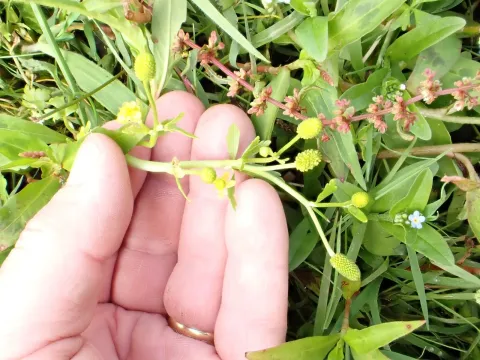
Cursed buttercup
Ranunculus sceleratus
Cursed buttercup is an annual herbaceous plant belonging to the Ranunculaceae family. In agricultural practice, it is identified as a problematic weed often found in damp or waterlogged environments, such as pastures and meadow edges.
What the section contains
Cursed buttercup
The plant originates from the temperate zones of the Northern Hemisphere and is widely distributed across Europe, Asia, and North America. It thrives in soils that remain saturated with water for extended periods, making it a nuisance in poorly drained fields.
Environmental requirements for this species are strictly linked to moisture availability. It acts as an indicator plant for areas that require improved drainage systems or hydrological management to sustain better-yielding forage crops.
Botanically, Ranunculus sceleratus is distinguished by its glabrous, hollow stem and small yellow flowers. The plant has a rapid life cycle and produces a significant quantity of seeds, which can remain viable in the soil for several growing seasons.
The root system is fibrous and shallow, indicating the plant's reliance on readily available moisture. Due to its physiological structure, it is highly sensitive to soil surface drying and can be effectively controlled by optimizing soil moisture levels.
The primary concern regarding this plant is its high toxicity. It contains protoanemonin, which causes severe irritation and internal damage to livestock if ingested in fresh pasture forage, necessitating strict grazing management in infested areas.
Diseases affecting the cursed buttercup include various powdery mildews and rusts. While the weed is resilient, these fungal pathogens can occasionally jump to neighboring crops, serving as an unintended source of field infection.
Insect pests are generally deterred by the plant's potent chemical defense mechanisms. However, the plant can still harbor certain mites and beetle larvae that may occasionally cause stress to the plant population under specific conditions.
Control strategies for this weed primarily focus on land drainage and mechanical removal before the plant sets seed. Intensive soil cultivation is highly effective because of the plant's short and fragile root system which does not tolerate deep burial.
Chemical control involving selective herbicides is reserved for cases where infestations cover large agricultural areas. Farmers must ensure that management practices minimize the impact on local ecosystem biodiversity while effectively eliminating the toxic population.