
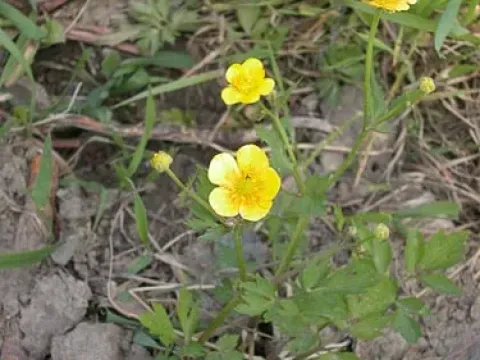
Creeping buttercup
Ranunculus serpens
Creeping buttercup (Ranunculus serpens) is an herbaceous perennial belonging to the Ranunculaceae family. In agriculture, it is often managed as a weed, but it can be used as a ground cover plant in landscape projects.
What the section contains
Creeping buttercup
Vegetative propagation is the most effective method for establishment. The plant spreads through stolons that develop roots at each node, allowing for rapid colonization of the available ground area.
Seeds can be sown in early spring or autumn. For optimal germination, a cool, moist period is required, reflecting the natural environmental cycle of this species.
When sowing, it is crucial to maintain proper spacing, even though the plant tends to spread aggressively. Using physical barriers is recommended to contain the spread within specific zones.
The establishment period is generally short, provided that moisture levels are consistently high. Once rooted, the plant develops a robust network that stabilizes the soil surface.
This species thrives in moist, heavy soils. It is particularly well-adapted to poorly drained areas where other sensitive crops often fail due to oxygen deprivation in the root zone.
Environmental preferences include partial shade. While it can survive in full sun, its growth is significantly better in areas with filtered light, which helps prevent dehydration of the foliage.
Soil fertility should be maintained at a moderate level. While the plant can tolerate nutrient-poor soils, it shows its most vigorous vegetative growth in areas rich in organic matter.
Climate adaptability is one of its strongest features. It exhibits extreme hardiness, being capable of surviving severe winter frosts without the need for additional protection.
Water requirements are consistently high. Management should focus on preventing the soil from drying out entirely, as the plant relies on a steady supply of surface moisture for its stolon development.
Creeping buttercup possesses significant chemical defenses. The presence of protoanemonin makes the plant largely unpalatable to herbivores and many insect pests, limiting direct damage.
Powdery mildew is the most common pathology, especially in high-density patches where air circulation is restricted. Management involves selective thinning of the canopy.
Fungal leaf spots may appear under prolonged wet weather conditions. While these infections are rarely fatal, they can reduce the overall health and vigor of the plant patches.
Agricultural competition from larger, taller weed species is a significant threat. Even an aggressive plant like the buttercup can be outcompeted by tall grasses that block its sunlight.
Cultural control methods involve cleaning equipment and managing surrounding areas to prevent the spread of stolon fragments, which can easily establish new patches elsewhere.