
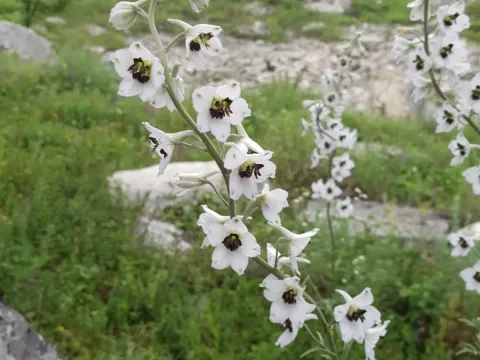
Curly larkspur
Delphinium crispulum
Curly larkspur (Delphinium crispulum), a member of the Ranunculaceae family, is a perennial plant known for its striking floral features. Seeds require a period of cold stratification to break dormancy, so sowing is best performed in early spring or late autumn.
What the section contains
Curly larkspur
For indoor propagation, sow seeds in a high-quality seed-starting mix in late winter. Keep the trays in a cool place with temperatures ranging from 15 to 18 degrees Celsius, ensuring the soil remains consistently moist but not waterlogged until germination occurs.
Once seedlings develop their first true leaves, they should be transplanted into individual pots to strengthen their root systems. This step is crucial for successful establishment when moving plants into their final garden positions.
When sowing directly into the ground, choose a site with well-draining soil and cover seeds with a thin layer of fine substrate. Proper spacing is essential, with 40-50 centimeters between plants to allow for healthy airflow and prevent disease.
The optimal time for transplanting hardened-off seedlings is when the threat of late spring frost has completely passed and the soil has started to warm up significantly.
This species thrives in sunny locations, though it can tolerate partial shade in regions with intense summer heat. Access to direct light is fundamental for promoting strong, non-leggy stem development and vibrant flowering.
The soil should be fertile, loamy, and well-draining, with a neutral to slightly alkaline pH level. Incorporating organic matter, such as well-rotted compost, before planting helps improve soil structure and nutrient retention.
Watering requirements are moderate; however, regular hydration is necessary during dry spells to prevent premature wilting. Avoid splashing water on the foliage, as this can encourage the development of various fungal pathogens.
Feeding the plants with a balanced fertilizer twice during the growing season supports vigorous growth. Applying a layer of organic mulch around the base of the plant helps maintain soil moisture and protects the roots from extreme temperature fluctuations.
Supporting the stalks is often necessary due to their height. Providing physical support structures like stakes prevents the plants from bending or breaking during heavy rain or strong wind conditions.
Powdery mildew is the most common threat to this plant, often appearing as a white, dusty layer on the leaves in humid conditions. Fungicide treatments and improving air circulation are standard management strategies.
Root rot is a major risk in poorly drained soils. To mitigate this, ensure the planting site is correctly amended with sand or gravel if the soil is heavy or prone to waterlogging, and avoid excessive irrigation.
Slugs and snails can cause severe damage to young foliage, especially during damp spring months. Implementing physical barriers or using pet-safe baits is effective in controlling their population around the garden beds.
Aphids are frequent pests that congregate on flower buds, causing distortion. Early intervention with insecticidal soap or neem oil is usually sufficient to manage infestations without harming beneficial garden insects.
Viral infections can occasionally occur, manifesting as mottled leaves or stunted growth. Since there is no cure for these viruses, the most effective management approach is to remove and destroy the affected plants to prevent spread.