
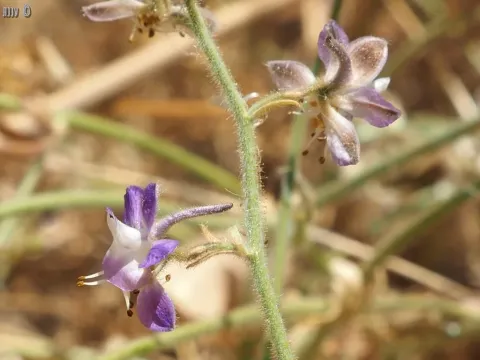
Consolida scleroclada
Consolida scleroclada
Consolida scleroclada, a member of the Ranunculaceae family, requires careful selection of sowing dates to ensure uniform germination and optimal plant establishment.
What the section contains
Consolida scleroclada
Sowing is typically performed in early spring as soon as the soil reaches the necessary physical maturity to support stable root development.
The seeds should be placed at a depth of 1–2 cm, as their small size necessitates precision to ensure consistent contact with soil moisture.
Proper spacing between rows is essential for this culture, promoting airflow and helping to reduce the incidence of moisture-related fungal diseases.
In regions with milder climates, winter sowing may be considered to allow plants to leverage early spring moisture for vigorous vegetative growth.
This crop performs best in well-lit, sunny areas, as shaded environments may lead to weak stems and reduced biomass production.
The soil should be light and well-drained, such as sandy loam or loam, to prevent waterlogging which is detrimental to the root system.
Consolida scleroclada exhibits moderate drought tolerance once established, but regular moisture during the critical growth phases is recommended.
The soil pH should ideally range from slightly acidic to neutral to ensure the optimal availability of nutrients for plant uptake.
Maintaining soil fertility through balanced fertilization programs, specifically targeting nitrogen and phosphorus, significantly improves yield potential.
The final yield of green mass is highly dependent on the diligent management of the crop and the prevention of competition from invasive weeds.
The optimal harvest time is during the peak flowering stage, when the concentration of beneficial secondary metabolites reaches its highest point.
Consistency in field maintenance, including regular hoeing and nutrient management, contributes directly to the overall uniformity of the harvest.
Implementing modern agronomic practices ensures that the crop maintains its quality, which is crucial for medicinal and industrial utilization.
Effective management of crop density allows for higher yield per hectare, maximizing the utilization of available field area throughout the season.
Fungal diseases like powdery mildew represent a major threat, particularly during periods of high humidity and significant temperature fluctuations.
Pests such as aphids can cause substantial damage to the leaves, leading to reduced photosynthetic capacity and overall weakening of the plants.
Root rot is often associated with poor drainage, necessitating pre-emptive soil management and the selection of well-drained field sites.
Integrated pest management strategies are recommended, focusing on early detection and the use of eco-friendly biological control agents.
Regular field scouting is essential for identifying potential pest outbreaks early, allowing for timely and localized intervention strategies.
The harvest should be conducted during the dry morning hours to minimize moisture content and prevent the degradation of raw material quality.
Care must be taken during the cutting process to avoid crushing the stems, which preserves the appearance and integrity of the medicinal product.
Immediate processing or transport to drying facilities is required after harvest to prevent the fermentation or mold formation in the collected mass.
Drying must occur in controlled conditions, away from direct sunlight, to prevent the decomposition of sensitive pigments and chemical compounds.
Storage should take place in dry, ventilated areas where the temperature is stable and there is no risk of pest contamination or excessive humidity.