
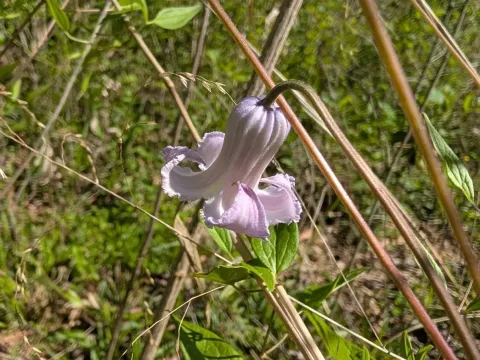
Curly clematis
Clematis crispa
Propagation of Clematis crispa is typically performed via seed stratification or vegetative methods such as softwood cuttings during the active growing season.
What the section contains
Curly clematis
Seeds should be sown in a well-draining, sterile potting mix in spring, following a period of cold stratification to break dormancy and ensure uniform germination.
When propagating by cuttings, select healthy, semi-hardwood shoots and maintain high humidity and consistent temperatures around 20 degrees Celsius for rooting.
Transplanting into the permanent garden site should be done in late spring, ensuring that the root ball is placed slightly deeper than it was in the container.
Proper spacing between plants is crucial, with at least 70 centimeters required to allow for adequate airflow and to facilitate future pruning and maintenance.
Curly clematis is a perennial vine belonging to the Ranunculaceae family, naturally occurring in the southeastern regions of the United States.
The plant thrives in moist, fertile soils that are well-amended with organic matter and possess a neutral or slightly alkaline pH balance.
It prefers full sun to light shade, provided that the base of the plant is shaded and kept cool, which is often achieved by mulching or planting low-growing companions.
Reliable support structures are essential, as this vine uses its leaf petioles to climb and requires vertical surfaces like trellises, fences, or arbors to spread properly.
Watering management is key; the soil should be kept consistently moist but not waterlogged, as poor drainage is the primary cause of root-related failures.
Wilt, caused by soil-borne fungi, is a common threat that can lead to sudden collapse of stems; immediate removal of affected plant parts is advised.
Powdery mildew often appears as a white dusty coating on the leaves during periods of high humidity and poor air circulation within the plant canopy.
Aphids and spider mites are prevalent pests that target succulent new growth, potentially transmitting viruses and causing the leaves to curl or yellow.
Root-knot nematodes can severely affect growth by damaging the root system, causing stunted development and reduced vitality during the peak blooming season.
Integrated pest management, including regular inspection and the use of targeted biological or chemical treatments, is essential to maintain healthy foliage.