
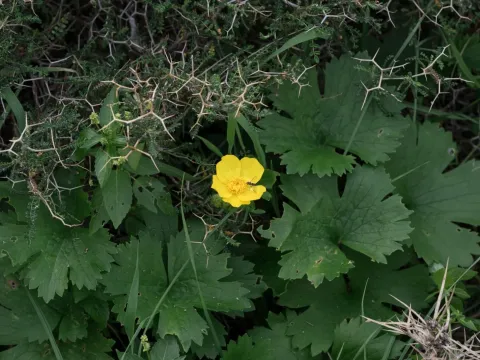
Cretan buttercup
Ranunculus creticus
Cretan buttercup (Latin: Ranunculus creticus) is a perennial herbaceous plant belonging to the Ranunculaceae family. Native to the island of Crete and parts of the Eastern Mediterranean, it thrives in rocky, moist, and shaded environments which shape its unique growth habits.
What the section contains
Cretan buttercup
The botanical structure includes a fibrous root system, basal leaves that form a rosette, and elegant floral stems topped with large, vivid yellow blooms. This architecture allows the plant to flourish in early spring, capitalizing on the moisture available after the winter season.
Cultivation requires specific conditions: a well-drained, nutrient-rich soil that mimics the Mediterranean habitat. It is vital to ensure that the substrate remains moist during the active growing season but never waterlogged, as this poses a significant risk of root decay.
In terms of climate, Ranunculus creticus performs best in mild regions. While it exhibits some tolerance to lower temperatures, extreme freezing can be fatal to the rootstock; therefore, greenhouse or container cultivation is recommended in harsher climates to facilitate winter protection.
The primary use of the Cretan buttercup is in ornamental horticulture. It is highly valued in rock gardens and alpine plant collections due to its distinct foliage and striking visual impact during the flowering period, making it a favorite among professional gardeners and hobbyists alike.
Fungal pathogens such as powdery mildew and root rot represent the greatest threat to the health of the Cretan buttercup. These issues are almost always tied to improper drainage and stagnant air conditions around the base of the plant.
Aphids pose a recurring threat during the spring growth flush. These pests congregate on the underside of leaves and tender buds, necessitating vigilant monitoring and, if necessary, the application of gentle insecticidal soaps or biological control agents.
Soil-borne nematodes can cause localized damage to the roots, leading to stunted growth and yellowing of the foliage. Crop rotation or the use of sterile growing media is essential when planting in controlled environments like pots.
Slugs and snails are notorious for their damage to the foliage of Ranunculus creticus. Gardeners often employ physical barriers such as crushed shells or copper tapes to protect the plant from these persistent mollusks during the early development stage.
Nutrient imbalances, particularly excessive nitrogen fertilization, can encourage lush vegetative growth at the expense of floral development. It is recommended to use balanced, slow-release fertilizers that provide essential nutrients without inducing excessive, weak stems.