
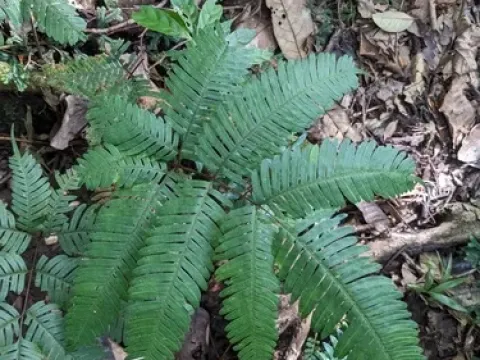
Blume's Brake
Pteris blumeana
Blume's Brake (Pteris blumeana) is a perennial fern belonging to the family Pteridaceae. Originating from the tropical forests of Southeast Asia, this plant has adapted to thrive in highly humid and shaded environments.
What the section contains
Blume's Brake
Botanically, the species is characterized by its delicate, pinnate fronds that emerge from a creeping rhizome. This growth habit makes it an excellent choice for ornamental cultivation where lush, green foliage is required to fill shaded spaces.
Environmental requirements for Pteris blumeana focus heavily on humidity and light control. It performs best in conditions with high relative humidity and filtered light, avoiding harsh direct sun that can cause bleaching and necrosis of the leaf tissues.
The substrate must be highly porous and rich in organic matter. A well-draining mixture consisting of peat moss, pine bark, and perlite ensures that oxygen reaches the rhizomes, preventing the hypoxic conditions that often kill potted ferns.
Thermal management is crucial, as this fern is intolerant of cold drafts and temperatures below 18°C. Consistent warmth and shelter from wind help maintain the vigor and aesthetic appeal of the fronds throughout the growing season.
The most significant threats to Pteris blumeana are water-borne pathogens, specifically root rot fungi (Pythium and Phytophthora spp.). These issues usually arise from poor drainage or excessive irrigation frequency.
Insect pests include spider mites and scale insects, which thrive in low-humidity environments. Integrated pest management strategies, such as maintaining appropriate humidity levels and applying organic horticultural oils, are effective in controlling these infestations.