
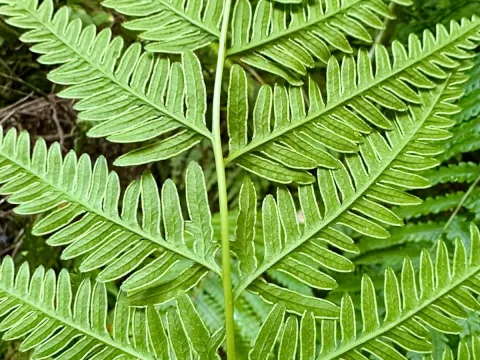
Shaking brake
Pteris tremula
The Shaking brake (Pteris tremula) belongs to the Pteridaceae family. This species originates from Australia and New Zealand, where it naturally thrives in moist, shaded environments, often found in deep forest understories.
What the section contains
Shaking brake
This fern species requires bright, indirect light to maintain its foliage health. Intense, direct sunlight should be strictly avoided as it causes rapid scorching of the delicate pinnae and impairs the plant's photosynthetic efficiency.
Ideal soil for cultivation must be light, porous, and well-draining. A mixture consisting of peat moss, perlite, and organic compost provides the structure necessary to balance moisture retention with adequate oxygen levels for the roots.
Ambient humidity is a crucial factor for this plant. To replicate its native habitat, maintaining a humidity level of 65% or higher is recommended, especially in indoor environments where heating systems tend to dry out the air.
Temperature control is essential throughout the growing season. The plant performs best in a temperate range of +18 to +24 degrees Celsius, and it should be shielded from sudden thermal shocks caused by cold drafts or heat vents.
Common pests affecting this culture include spider mites and scale insects, which often thrive in indoor conditions where air circulation is poor and humidity levels are inconsistently maintained.
Fungal diseases, specifically root rot, occur when the growing medium remains waterlogged for extended periods. Proper drainage is the primary defense against such pathogens that target the root crown.
Monitoring the undersides of the fronds is essential for early pest detection. If infestation occurs, horticultural oils or mild systemic insecticides should be applied to manage the population effectively.
Sanitation practices are vital. Removing dead or damaged fronds prevents the accumulation of decaying matter, which can serve as a breeding ground for various fungal spores and pests.
Adherence to a balanced watering schedule prevents the physiological stress that often makes plants susceptible to opportunistic infections and pest colonization throughout the year.