
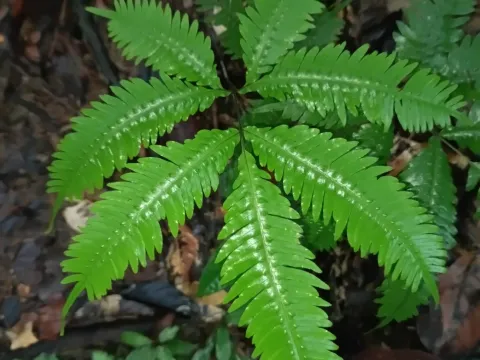
Pteris pungens
Pteris pungens
Pteris pungens is a distinct species within the Pteridaceae family, widely recognized for its arching, intricate fronds. Native to the tropical regions of the Americas, it thrives in environments that mimic its natural habitat of moist, shady forests.
What the section contains
Pteris pungens
This fern requires high ambient humidity to remain healthy, often needing misting or the use of pebble trays in controlled indoor environments. Maintaining a humidity level of at least 65 percent is essential for preventing the fronds from curling or browning.
The ideal temperature range for this plant is between 18 and 24 degrees Celsius. It is quite sensitive to temperature fluctuations and cold drafts, which can cause significant stress and lead to the rapid decline of its delicate foliage.
Soil requirements focus on high organic matter content and excellent drainage. A mix consisting of peat moss, pine bark, and perlite provides the necessary structure and aeration for the root system to prevent compaction and moisture retention.
Regarding light, Pteris pungens prefers medium to low light intensity. Direct sunlight must be avoided at all costs, as the plant's leaves lack the protective mechanisms to handle high radiation levels, resulting in rapid tissue necrosis.
Pteris pungens is primarily susceptible to infestations of aphids, which colonize the growing tips and underside of the fronds. Their feeding habits cause leaf deformation and can also act as vectors for various plant viruses.
Fungus gnats are a common problem in damp, peat-based potting media. While the adults are mostly a nuisance, their larvae can cause damage to the fine root hairs of the fern, impacting the overall water uptake of the plant.
Root rot, caused by Pythium or Phytophthora fungi, remains the most significant threat to the survival of this crop. Overwatering combined with poor drainage creates an anaerobic environment that triggers the development of these pathogens.
Leaf spot diseases are frequently encountered when water is allowed to sit on the foliage for extended periods in low-ventilation settings. Such spots can enlarge quickly, potentially leading to the loss of large portions of the fern's canopy.
Integrated pest management, including regular inspection and maintaining optimal environmental parameters, is the most effective approach for managing these threats. Keeping the environment clean and well-aerated significantly reduces disease pressure.