
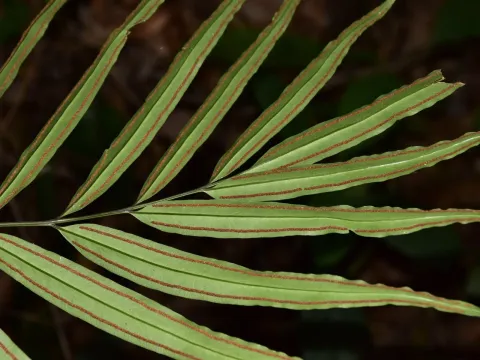
Taenitis
Taenitis
Taenitis is a genus of ferns within the Pteridaceae family, recognized for its distinct architectural foliage and adaptation to tropical forest floor environments.
What the section contains

Taenitis
The plant originates from the tropical regions of Southeast Asia and Oceania. Successfully cultivating Taenitis in a controlled environment requires an accurate simulation of its native humid and shaded habitat.
The climate requirements include a consistent temperature range between 20°C and 26°C. Maintaining high humidity, ideally above 70%, is essential to prevent the leaf tips from browning and ensure vigorous development.
The preferred soil structure must be porous and slightly acidic. A mix consisting of sphagnum peat, perlite, and pine bark is ideal to ensure both moisture retention and proper root oxygenation.
Light management is a critical agronomic factor. The culture requires high-intensity indirect light; prolonged exposure to direct sunlight will cause severe chlorosis and damage the delicate cell structures of the fronds.
The most significant pathological threats to Taenitis are soil-borne pathogens, specifically Pythium and Phytophthora, which flourish in waterlogged substrate conditions.
Spider mites represent the primary entomological threat in indoor cultivation, often appearing when ambient humidity levels drop below the recommended thresholds.
Scale insects can infest the rachis of the fronds, leading to a general decline in plant vigor and the potential for secondary sooty mold infection on the leaves.
Fungal leaf spots are frequently observed if the foliage remains wet for extended periods without adequate air movement or ventilation.
Integrated pest management strategies should include regular inspection of the underside of the fronds, proper sanitation practices, and the use of preventative systemic fungicides if necessary.