
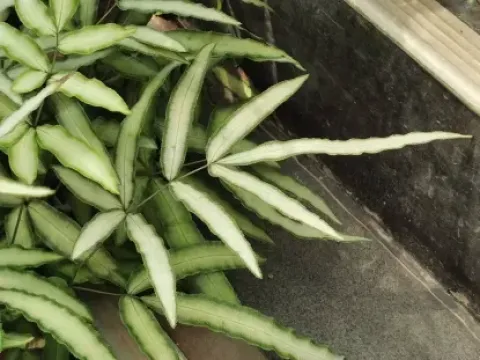
Pteris hybrid
Pteris hybrids
Pteris hybrid belongs to the Pteridaceae family and is a popular ornamental fern variety. These plants are native to tropical and subtropical regions, which dictates their specific requirements for high humidity and consistent warmth throughout the year.
What the section contains
Pteris hybrid
The culture thrives in bright, indirect light conditions. Direct sunlight can cause severe scorching of the fronds, leading to permanent damage to the leaf tissue. It is essential to maintain an ambient temperature range of 18°C to 24°C, protecting the plant from cold drafts and heat sources.
Soil requirements for Pteris hybrids include a well-draining, moisture-retentive, and slightly acidic medium. A typical blend consists of peat moss, perlite, and pine bark, ensuring the roots have access to oxygen while maintaining the constant moisture level the fern needs.
Cultivation practices focus heavily on environmental humidity management. Since these ferns are susceptible to dry indoor air, frequent misting or the use of an ultrasonic humidifier is highly recommended to mimic their natural tropical habitat and prevent the tips of the fronds from browning.
Watering should be consistent; the substrate must never dry out completely, but neither should it become waterlogged. During the growing season, a balanced liquid fertilizer, diluted to half-strength, can be applied monthly to support healthy growth and vibrant foliage development.
Common pests affecting Pteris hybrids include scale insects and mealybugs. These sap-sucking pests often congregate on the undersides of leaves and along the stems, weakening the fern over time if not treated with appropriate systemic insecticides or horticultural oils.
Spider mites are a major threat, particularly in environments with low humidity. They form delicate webs and cause the foliage to lose its healthy green color, eventually leading to chlorosis and leaf drop. Increasing humidity levels is a primary preventative measure.
Root rot is the most common physiological disorder caused by overwatering or poor drainage. When the soil remains saturated for extended periods, the root system begins to decay, which is often signaled by a yellowing of the fronds and a distinct musty odor from the soil.
Fungal leaf spots can occur when water sits on the foliage for too long in poorly ventilated conditions. Ensuring adequate spacing between plants and keeping the fronds dry during evening hours helps to minimize the risk of bacterial and fungal pathogens.
- Maintain consistent soil moisture levels.
- Provide good air circulation around the plant.
- Inspect foliage regularly for early pest detection.
- Use clean, sterilized tools for any pruning activities.