
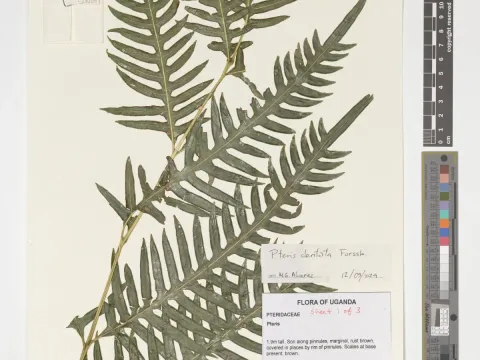
Toothed brake
Pteris dentata
Pteris dentata, commonly known as the toothed brake, is a member of the Pteridaceae family. This perennial fern is native to tropical and subtropical regions of Africa and various islands in the Indian Ocean, flourishing in shaded and humid forest floors.
What the section contains
Toothed brake
The plant features pinnate fronds with distinctively serrated edges, which provides its common name. Morphologically, it develops into lush clumps, making it an excellent candidate for ornamental horticulture in controlled indoor environments.
Successful cultivation requires a high-humidity environment, ideally maintained above 65%. Temperatures should remain stable, ranging between +18°C and +24°C, as the plant is sensitive to thermal shock and cold drafts which can damage the delicate frond tissues.
Soil requirements focus on high aeration and moisture retention. A standard potting mix for ferns, containing peat moss, leaf mold, and coarse sand or perlite, ensures that the root system receives sufficient oxygen while avoiding waterlogged conditions.
The primary agricultural and economic use for Pteris dentata is in the interior plantscape industry. It is widely grown in greenhouses and homes for its aesthetic appeal and its ability to act as a natural air humidifier in enclosed spaces.
The most common pests affecting Pteris dentata are spider mites and mealybugs. These organisms thrive in environments with low humidity, causing the fronds to wilt, turn yellow, or show signs of structural deformation if left unchecked.
Scale insects can also infest the fern, particularly clustering around the base of the stems. Regular visual inspection of the underside of the leaves is crucial for the early detection and management of these persistent sap-sucking pests.
Root rot is the most significant pathological threat, usually caused by overwatering or poor drainage. Excess water promotes the growth of anaerobic bacteria and fungi, which can quickly compromise the plant's vascular system.
Leaf spot diseases may occur when environmental hygiene is neglected, specifically in conditions of stagnant air and high moisture levels on the foliage. Improving air circulation is the best preventive measure against these fungal attacks.
When implementing pest control measures, growers must exercise caution. Ferns are notoriously sensitive to concentrated chemical sprays; therefore, organic or systemic treatments should be applied at lower concentrations to ensure plant safety.