
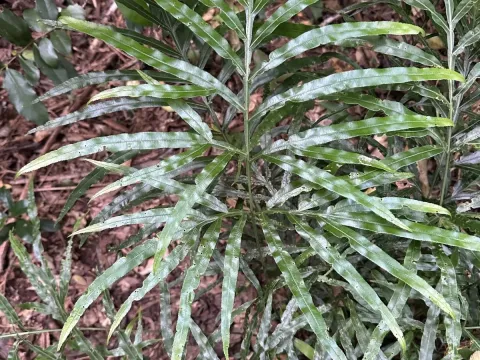
Umbrella fern
Pteris umbrosa
Umbrella fern (Pteris umbrosa) is a member of the Pteridaceae family. Native to the humid forests of eastern Australia, this perennial fern is well-adapted to low-light conditions and stable temperatures typical of temperate to subtropical climates.
What the section contains
Umbrella fern
The primary environmental requirement for this species is high relative humidity. To ensure healthy frond development, it is essential to maintain humidity levels above 60% and avoid placing the plant near radiators or air conditioning vents.
Soil composition should be light, rich in organic matter, and slightly acidic. A mixture consisting of peat moss, pine bark, and perlite provides the necessary structure to prevent compaction and ensure optimal root aeration.
Regarding light, this plant thrives in dappled shade or indirect bright light. Excessive exposure to direct sunlight will scorch the delicate foliage, while insufficient light may result in slow growth and loss of the characteristic deep green color.
Watering practices are critical for Pteris umbrosa. The substrate should be kept consistently moist but never waterlogged. Using room-temperature, filtered water helps prevent leaf-tip browning and damage from chlorine or mineral buildup.
Scale insects are a common pest that can infest the stems and undersides of the fronds. These pests appear as small brown bumps and require manual removal or the application of horticultural oils for effective control.
Spider mites are prevalent in environments where the air is too dry. Their presence is indicated by stippling on the leaves and fine webbing, necessitating increased misting and the use of acaricides if an outbreak occurs.
Root rot is the most significant disease threat, typically caused by overwatering or poor container drainage. Symptoms include wilting and yellowing fronds, which usually require immediate repotting into fresh, dry soil.
Fungal leaf spot diseases can develop if the foliage remains wet for extended periods in low-airflow conditions. Ensuring good ventilation and watering at the base of the plant is vital to prevent these issues.
Foliar chlorosis, while not a pest-driven disease, often mimics the signs of a pathogen attack. It is frequently caused by a magnesium or iron deficiency and can be corrected by adjusting the soil pH and applying balanced micronutrient fertilizers.