
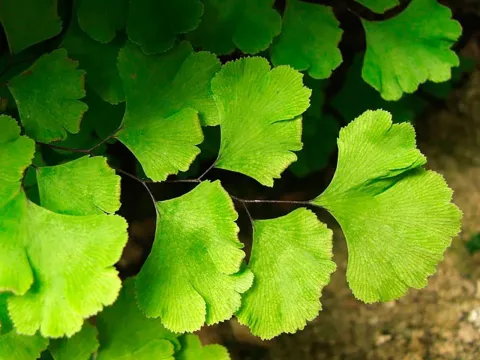
Southern maidenhair fern
Adiantum capillus-veneris
The southern maidenhair fern (Adiantum capillus-veneris) is a member of the Pteridaceae family. This delicate perennial fern is naturally distributed across tropical and subtropical regions worldwide, typically thriving in damp environments such as cliff crevices, near springs, and along rocky streams.
What the section contains
Southern maidenhair fern
The cultivation of this fern requires strict adherence to humidity levels, ideally above 60%. In arid indoor environments, the fine, fan-shaped leaflets (pinnules) are prone to desiccation and browning, requiring regular misting or placement on humidity trays.
Temperature requirements are centered around stable moderate warmth, specifically between 18°C and 22°C. The plant does not tolerate frost or cold drafts, which may cause the delicate fronds to wither and die back prematurely.
The soil substrate must be highly porous and well-draining, mimicking the forest floor or rocky soils where it originates. A mixture of peat moss, perlite, and bark is often recommended to maintain moisture without causing waterlogged roots.
Indirect light is essential for healthy development. While it grows in shady areas in nature, it still requires enough light to support photosynthesis without scorching its thin, hair-like stalks, which are characteristic of this species.
Common pests include scale insects and spider mites. These pests thrive in dry conditions and can quickly infest the undersides of the fronds, necessitating early detection and treatment with insecticidal soap or specialized systemic agents.
Root rot is the most common physiological disorder, usually caused by overwatering or poor drainage. To manage this threat, it is crucial to ensure that the potting medium remains moist but never saturated, allowing for periodic aeration of the roots.