
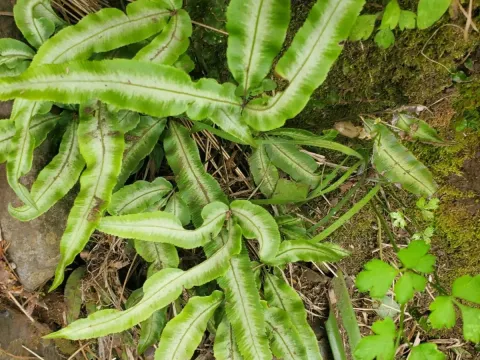
Japanese brake
Pteris nipponica
Japanese brake (Pteris nipponica) is an elegant perennial fern belonging to the Pteridaceae family. Native to the woodlands of East Asia, this plant has adapted to shaded, high-humidity environments, making it a popular choice for indoor cultivation and decorative horticulture.
What the section contains
Japanese brake
The plant thrives in bright, indirect light conditions. Direct sunlight should be strictly avoided as it can cause bleaching and scorching of the delicate fronds. A stable temperature range between 18°C and 24°C is ideal for its vegetative growth and overall plant health.
High humidity levels are crucial for the Japanese brake. Maintaining an ambient humidity of at least 60% is recommended to prevent tip burn and maintain the lush appearance of the fronds. Regular misting or the use of pebble trays with water can help improve the microclimate.
The potting medium must be well-draining, loose, and rich in organic matter. A mixture of peat moss, perlite, and pine bark is typically suitable, providing the necessary aeration and moisture retention that the root system requires to flourish without becoming waterlogged.
Watering should be consistent, ensuring the top layer of the soil remains slightly moist. Using soft, room-temperature water is preferred to avoid the buildup of mineral salts, which can negatively affect the delicate roots of the fern over extended periods.
Spider mites are the most common pests that attack Pteris nipponica, especially when indoor humidity is insufficient. These pests feed on the underside of the fronds, leading to a mottled appearance and gradual decline in plant vigor.
Root rot is a significant physiological threat caused by overwatering or inadequate soil drainage. Once the roots become waterlogged and suffocate, the plant exhibits yellowing fronds and root decomposition, which is often difficult to reverse.
Mealybugs can become a persistent problem, hiding in the crotches of the fronds and sap-sucking. Manual removal combined with insecticidal soap application is often effective if the infestation is detected early and handled systematically.
Scale insects are another potential threat, forming small, hard bumps on the stems or undersides of leaves. They should be mechanically removed using a cotton swab dipped in rubbing alcohol to prevent further colonization of the plant.
Fungal leaf spots can occur if the foliage is kept excessively wet and air circulation is poor. Proper spacing and avoiding water on the leaf surfaces during evening hours can significantly reduce the risk of such infections in horticultural settings.