
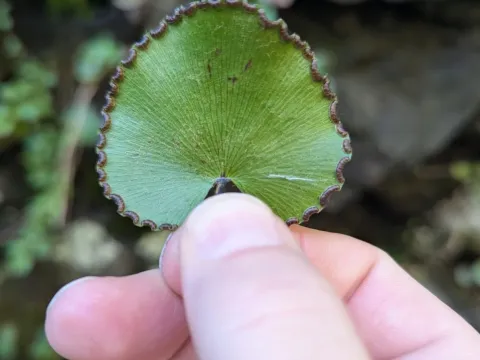
Kidney-shaped maidenhair
Adiantum reniforme
Kidney-shaped maidenhair (Adiantum reniforme) is a fern species belonging to the Pteridaceae family. It is endemic to Macaronesia, specifically found in the Canary Islands and Madeira, where it grows in damp, rocky crevices within mild subtropical environments.
What the section contains
Kidney-shaped maidenhair
The plant is botanically distinct due to its simple, kidney-shaped fronds, which contrast with the highly divided leaflets characteristic of most other Adiantum species. It possesses a creeping rhizome covered in scales, allowing it to anchor effectively into rocky, nutrient-poor substrates.
Cultivation requires a specialized growing medium that is loose, acidic, and well-draining. The root system is extremely sensitive to waterlogging, necessitating a substrate composition that prevents compaction while retaining adequate moisture for the delicate rhizomes.
Environmental conditions must mimic its native habitat, requiring high relative humidity (above 70%) and stable temperatures. It thrives best in indirect, filtered light, as direct sun exposure can severely desiccate the fronds and lead to permanent tissue damage.
In terms of horticultural use, this species is primarily cultivated as a rarity for botanical conservatories and specialized greenhouses. Due to its slow growth rate and sensitivity to environmental shifts, it is not grown as a mass-market ornamental crop.
Common pests associated with this species include scale insects and mealybugs, which thrive in protected greenhouse conditions. These pests hide on the underside of fronds, often going unnoticed until the plant shows signs of reduced vigor or stunted growth.
Fungal diseases remain the most significant threat to the culture. Root rot caused by overwatering or poor drainage is a leading cause of loss. Furthermore, fungal leaf spots can emerge if stagnant air and humidity persist without adequate airflow, requiring careful sanitation protocols.