
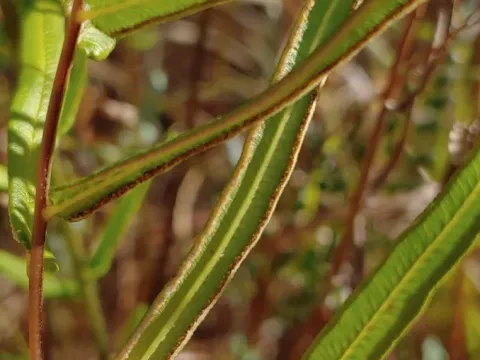
Ladder brake
Pteris longifolia
The ladder brake (Pteris longifolia) belongs to the Pteridaceae family. It is a perennial fern native to tropical and subtropical regions worldwide, widely recognized for its long, pinnate fronds and elegant growth habit in conservatory environments.
What the section contains
Ladder brake
The plant thrives in temperatures ranging from 18 to 24 degrees Celsius. It is sensitive to extreme temperature shifts, which can induce physiological stress and hinder the development of new foliage, therefore stable indoor conditions are strictly required.
Regarding light, this species prefers filtered light or partial shade. Direct exposure to intense sunlight must be avoided at all costs, as it quickly dehydrates the fronds and causes permanent bleaching or scorching of the leaf tissues.
A well-draining, moisture-retentive soil medium is essential for this fern. A standard mixture typically consists of peat moss, pine bark, and coarse perlite, ensuring that the roots have access to oxygen while maintaining appropriate moisture levels.
Maintenance of high humidity is a critical agrotechnical factor. Growers should maintain relative humidity levels above 60 percent to ensure optimal metabolic activity and the healthy expansion of new fronds throughout the growing season.
The primary pests affecting Pteris longifolia are spider mites and scale insects. These organisms often exploit low-humidity conditions, quickly colonizing the underside of the fronds and draining plant sap.
Diseases are mostly linked to improper water management. Root rot is a common issue when the substrate remains saturated for extended periods, creating an anaerobic environment that fosters pathogenic fungal growth.
Effective pest management involves integrated control strategies, including the application of systemic insecticides or biological agents. Regular scouting of the foliage is necessary to detect infestations at an early stage.
To mitigate fungal threats, it is advised to sanitize all growing equipment and ensure proper air circulation around the plants. This reduces the humidity on leaf surfaces while maintaining high ambient air moisture.
In case of severe root disease, repotting the plant into fresh, sterilized substrate and pruning infected root segments is often the only way to save the specimen from complete decline.