
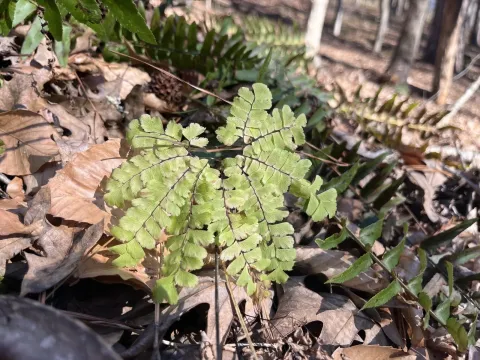
Northern maidenhair fern
Adiantum pedatum
The Northern maidenhair fern (Adiantum pedatum) is a member of the Pteridaceae family. It is a hardy, deciduous, herbaceous perennial known for its distinctive horizontal, fan-shaped fronds and dark, wiry stalks.
What the section contains
Northern maidenhair fern
Native to moist woodlands in North America and East Asia, this plant thrives in environments that mimic its natural habitat. It requires consistent moisture and protection from harsh wind and direct afternoon sunlight.
Soil conditions should be rich in organic matter, slightly acidic, and well-draining. The plant performs best in a woodland garden setting, where leaf mold or compost can be naturally incorporated into the surface layer.
The species is remarkably winter-hardy, surviving in USDA zones 3 to 8. It remains dormant during the cold season, with new growth emerging from creeping rhizomes in late spring after the danger of frost has passed.
Maintenance is minimal once established, provided the soil remains consistently moist. Overwintering protection is usually unnecessary in its native hardiness range, though light mulch is beneficial in colder regions.
Root rot caused by fungal pathogens like Phytophthora or Pythium is the primary threat to Adiantum pedatum. It typically occurs in soil that lacks sufficient drainage or in sites with standing water.
Spider mites are the most common pest, especially when the plant is exposed to low humidity or extended dry spells. Infestations are characterized by yellowing foliage and fine webbing on the underside of the leaflets.
Slugs and snails can consume young, tender fronds during the spring growth phase. Using physical barriers like copper tape or crushed shells around the crown can help mitigate damage from these gastropods.
Botrytis blight may affect the plant during periods of high humidity and poor airflow. This fungus causes grayish mold to appear on the stalks, often leading to tissue decay if not addressed quickly.
Regular sanitation, which involves removing old, dead fronds in early spring, is crucial for preventing disease buildup. This practice allows for better airflow and helps maintain a healthy, vigorous clump.